
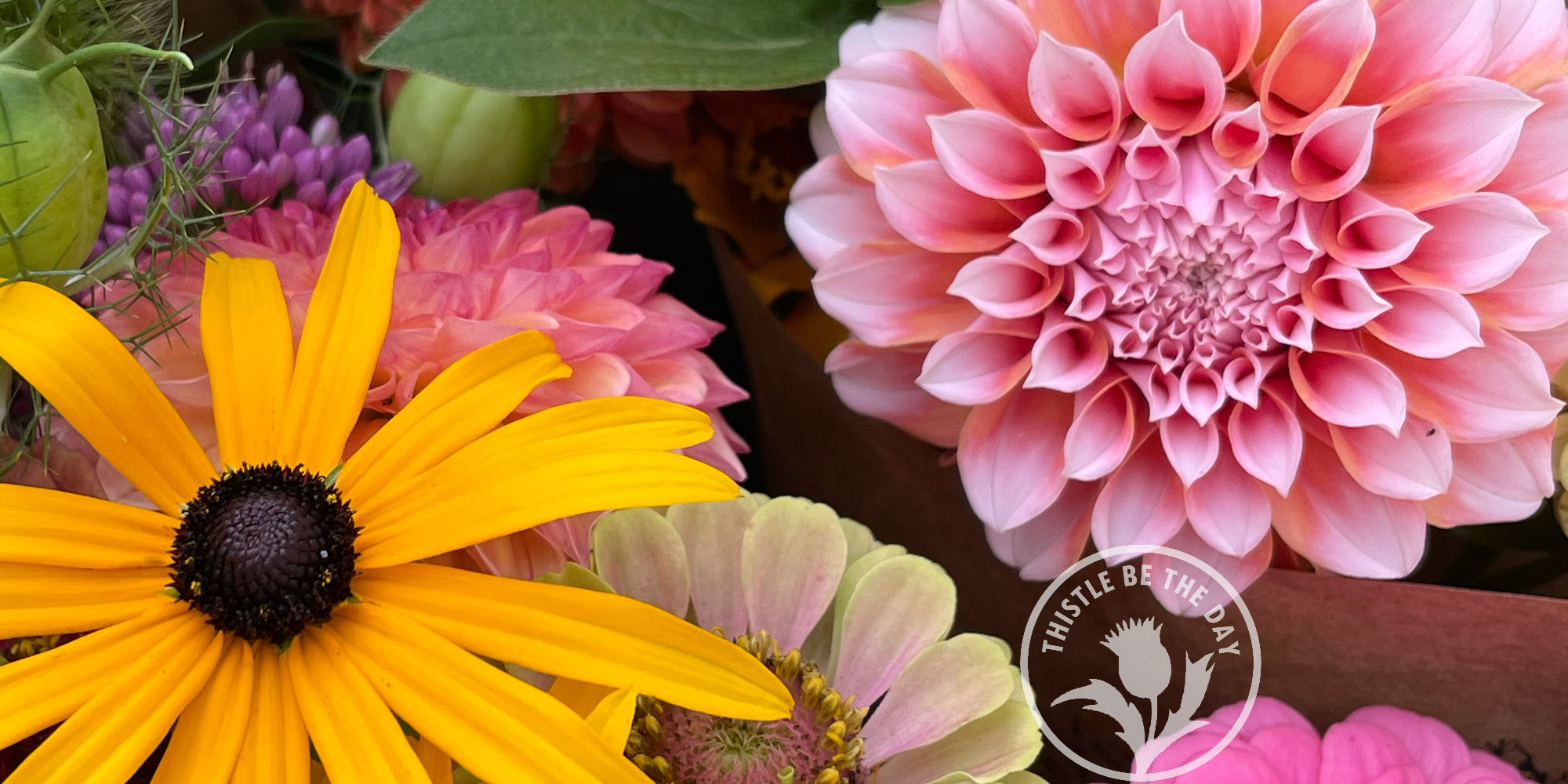
I’ve always been drawn to flowers. Their colors, textures, fragrances, and unique way that they beautify the landscape drew me in. And I love watching the interactions between blooms and bees; they share that delicate dance. It is a seemingly simple relationship that benefits them both and yet holds the planet and the life contained within on their shoulders. Flowers are fascinating, mysterious, intriguing, and beautiful. Naturally, we are drawn to them and want to connect with them. Bouquets give us that connection. They allow us to bring all that beauty and mystery inside our homes to enjoy as we go about our daily routines. Bouquets can be gifted to our loved ones on special occasions or to brighten their day, sharing that beauty with those we care about. And when you create that bouquet yourself, it makes them all the more special.
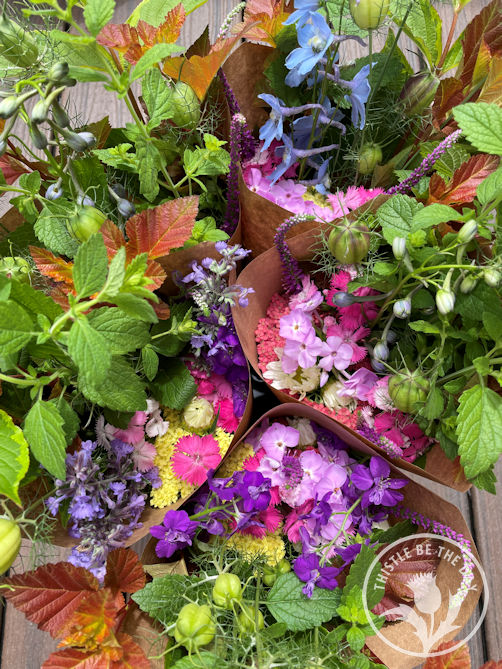
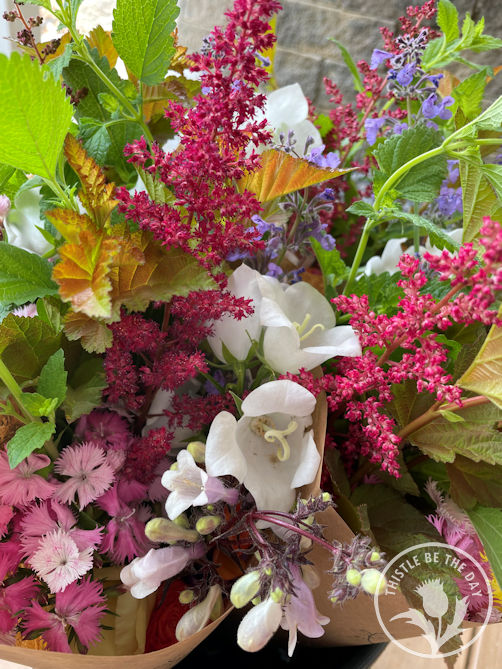
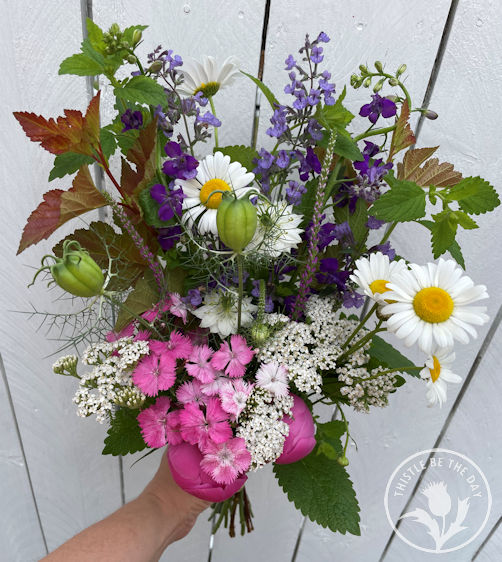
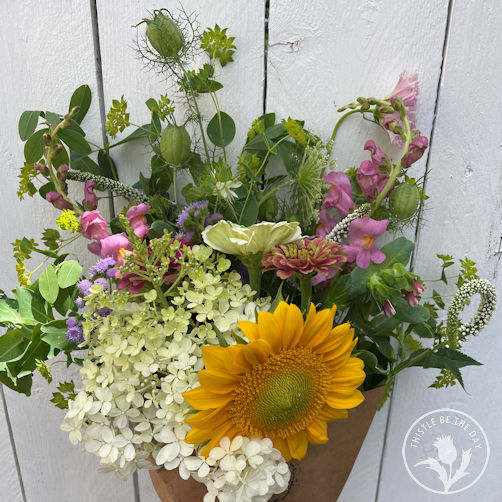
Ever since I was a little girl, I have loved making bouquets. I used to pick handfuls of dandelions and proudly bring them to my grandmother, who was unfortunately allergic. She would never turn them away. However, she would ask me to set them on her porch where she could enjoy them from afar. Even as a child, I saw firsthand the joy flowers could bring. Fast forward (ahem) a few years, and now I’ve chosen to make my love of flowers and joy in sharing them with others a more significant part of my life. While I’m certainly not an expert, I’ve learned a lot about bouquet-making since those first handfuls of dandelions, and in this week’s post, I thought I’d share some tips I’ve learned along the way.


Firstly, it might be helpful to know about the key cutting garden plant types and examples of flowers that fall into those types. There are so many options when it comes to bouquet ingredients!
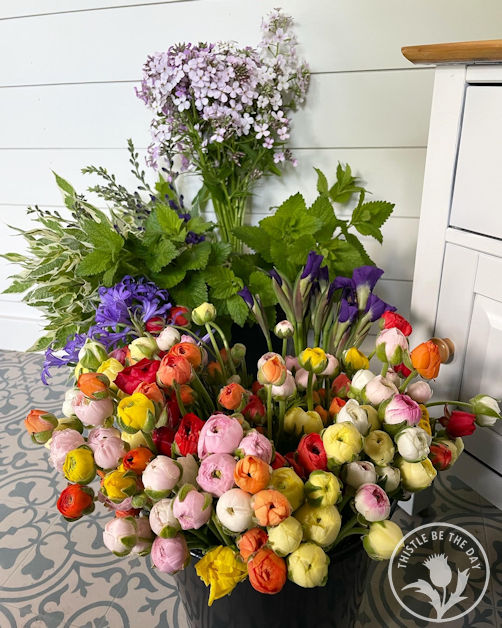
- Bulbs, Corms, & Tubers: Tulips, Daffodils, Ranunculus, Anemones, Dahlias, Gladiola
- Biennials: Canterbury Bells, Foxglove, Sweet William
- Hardy Annuals: Larkspur, Love-in-a-Mist, Queen Anne’s Lace
- Perennials: Peony, Rudbeckia, Anise Hyssop
- Woodies: Ninebark, Viburnum, Flowering Trees & Shrubs-Lilacs & Hydrangeas
- Tender Annuals: Zinnias, Sunflowers, Cosmos
- Vines: Clematis, Hops
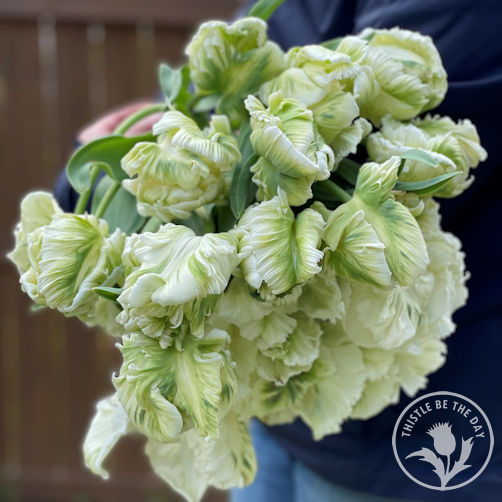

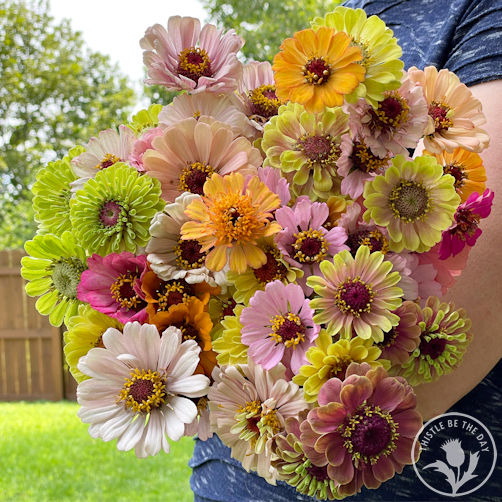
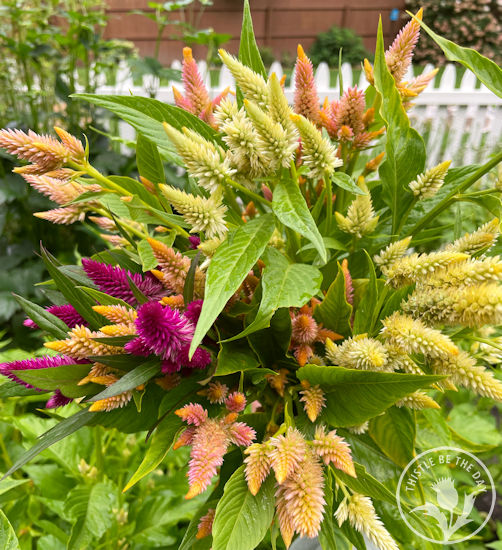
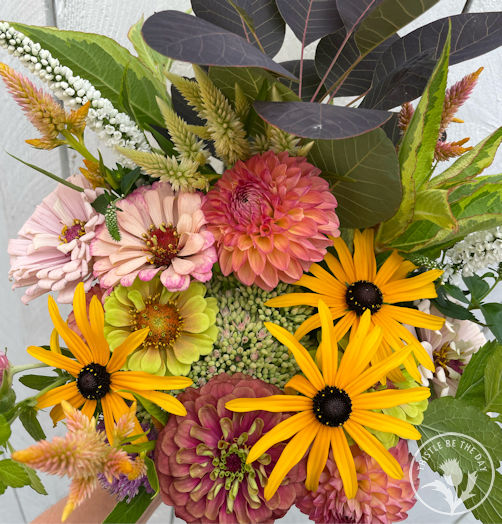
STEP 1. SELECT YOUR FLOWERS: The first step to building a beautiful bouquet is to select your flowers (of course!) In-season blooms are best; sourcing them from a local flower farmer or your garden will ensure the freshest flowers. When choosing your flowers, consider color scheme (choose complementary colors or one shade) and scent (these should complement one another). If you’re cutting flowers from your garden, cut them early in the morning or evening when the stems have the most moisture, which will help them last longer. Also, bring a clean container with cool, fresh water to the garden to place your flowers in. This will ensure that they stay hydrated. It’s also a good idea to consider selecting a variety of bloom shapes and sizes for your bouquet (although an arrangement containing a single flower type can also be striking). Here is a list of bouquet component categories and examples of flowers that fall into those categories. Keep these in mind when picking your flowers. Having a mix of flowers from these categories makes bouquets extra unique and exciting.
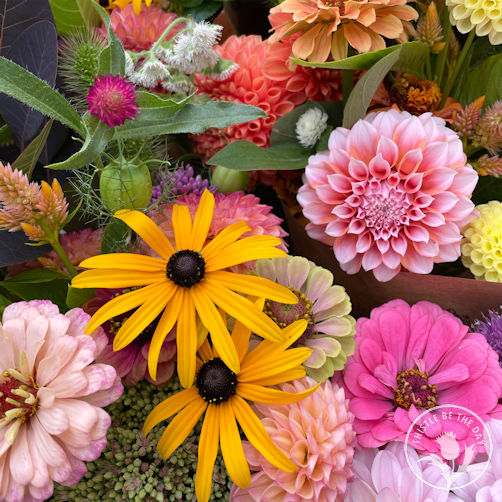
- Focals: Peony, Tulip, Sunflower, Dahlia
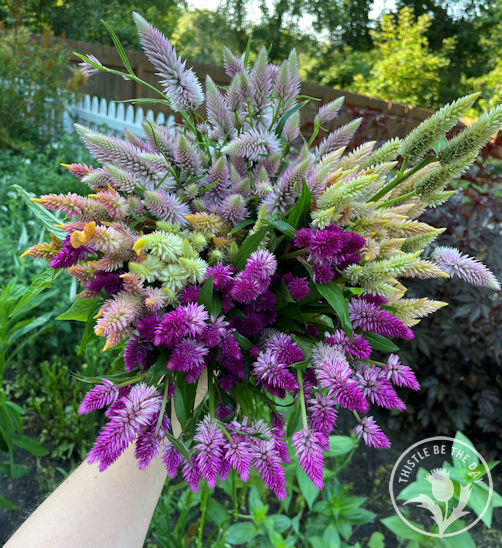
- Spikes: Delphinium, Snapdragon, Celosia, Stock
- Disks: Anemone, Cosmos, Yarrow, Zinnia
- Filler: Orlaya, Goldenrod, Statice
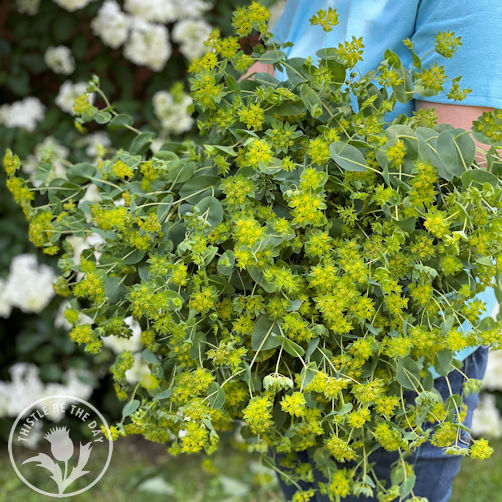
- Foliage: Bupleurum, Ninebark, Cress, Herbs, Hosta
- Air/Texture/Sparkly Bits: Love-in-a-Mist, Grasses, Poppy Pods, Globe Amaranth
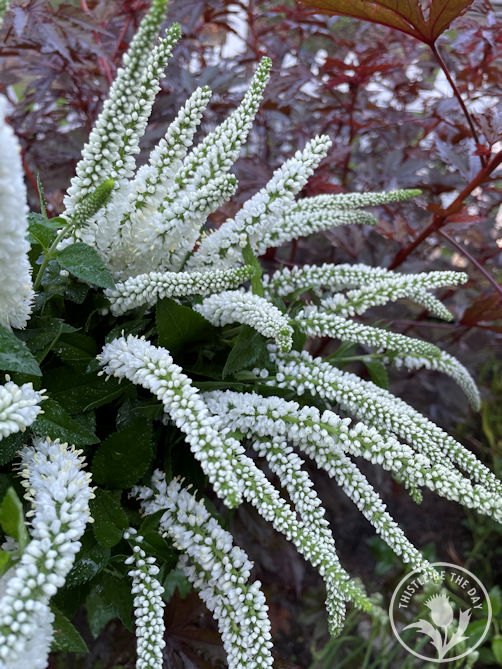
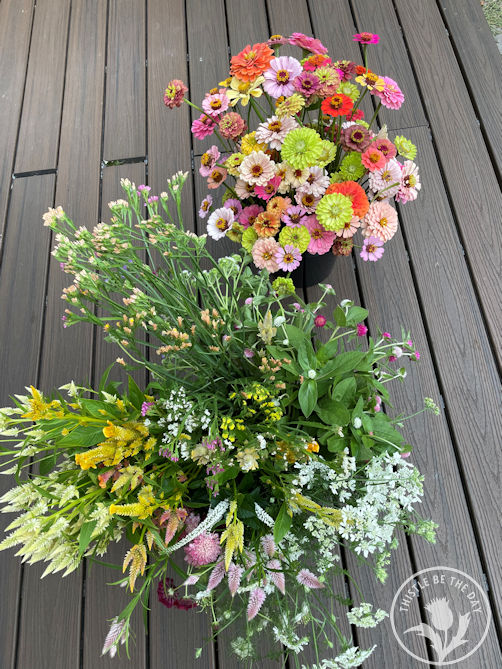
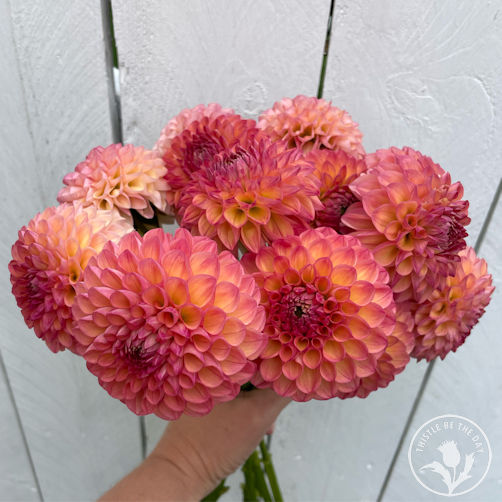
STEP 2. PREPARE YOUR FLOWERS: Once you bring your flowers inside, they must be prepped before you can arrange them. To do this, remove all or most of the leaves and thorns on the stems and any unwanted side buds. If you haven’t already placed them in water, do so now, and ensure that no foliage is below the waterline. For the most extended vase life, let your flowers rest and condition in water in a cool, dark space for a few hours before arranging. Having been cut from the plant, your flowers are in shock and need adequate time to rest and fully hydrate to prevent premature wilting.
STEP 3. BUILD YOUR BOUQUET: It’s finally the moment you’ve been waiting for; let’s get building! Unless I’m making a large arrangement, I prefer to build my bouquets in my hand before placing them in a vase, but you can also create them directly in your vase.
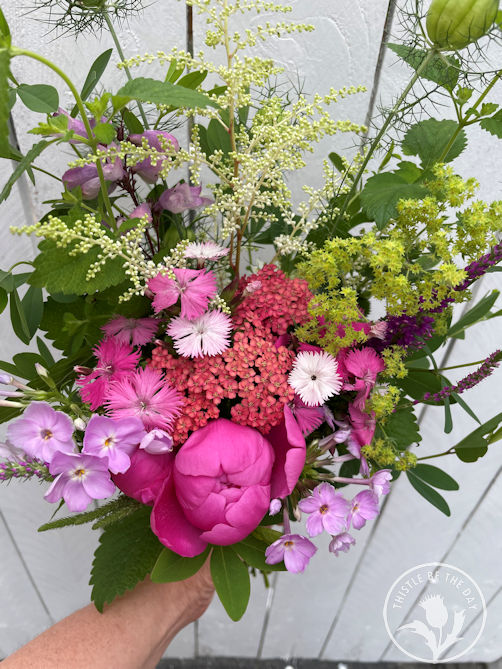
I like to start with my focal flower and build around it. Choose your favorite, largest, or most exciting flower as your focal flower. Hold it upright and add your other flowers around it while you rotate the bouquet as you build. Add filler flowers, discs, and spikes as you turn your bouquet. You can adjust the stems to different heights for visual interest. Finally, add your foliage and airy/sparkly bits to complete the arrangement. Professional florists include flowers in odd numbers to look more natural, grouping smaller flowers in three to five sets to create small clusters. They will also place flowers in triangle patterns to make the bouquet symmetrical.

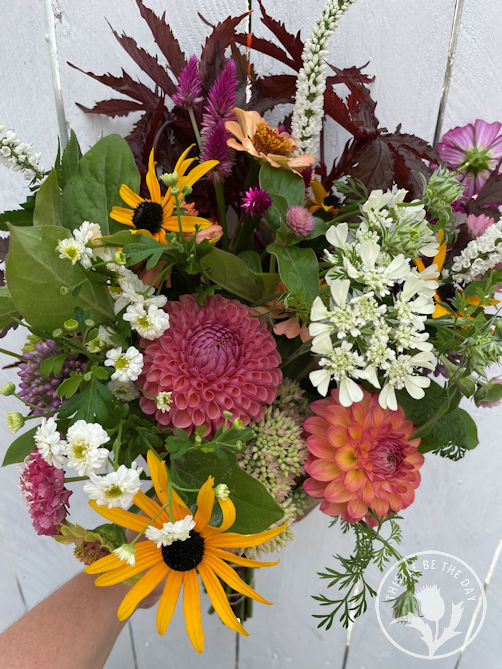
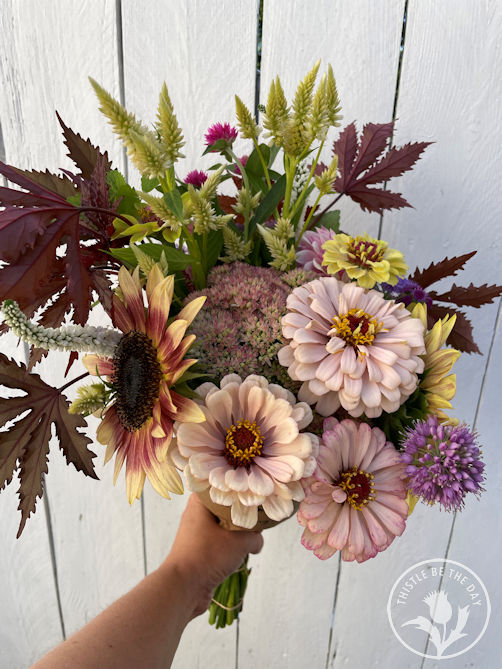

STEP 4. CHOOSE A VASE: After you’ve completed your bouquet, give the bottom of the stems a fresh cut and place them in your vase. If you’re building directly into a vase, recut each stem before placing it in the vessel. This will ensure that the flowers stay adequately hydrated. A quick note about vases: they should be squeaky clean. Like, clean enough for you to drink out of clean because bacteria will also prematurely kill your flowers. Also, the vase should be proportional to your bouquet and may even need to be selected based on the type of flower (for example, tulips need more support, so a straight-sided vase is best, and top-heavy flowers might need a weighted vessel).
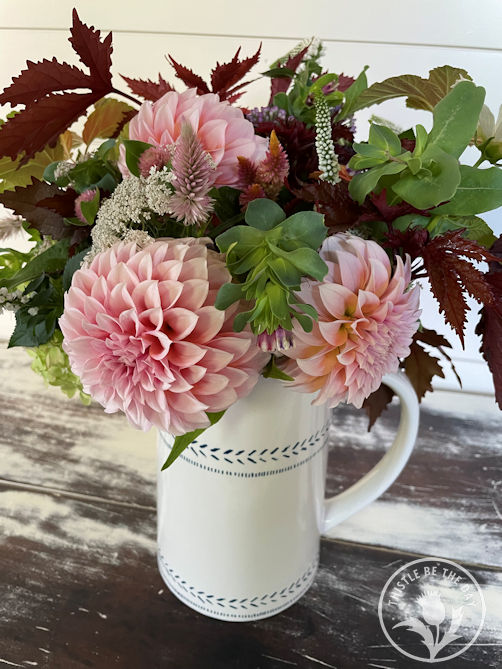
STEP 5. ENJOY: Now, sit back, relax, and enjoy what you’ve created! And if you’d like to know how to get the longest vase life out of your flowers once they’ve been arranged, visit my post about keeping flowers fresh once picked.
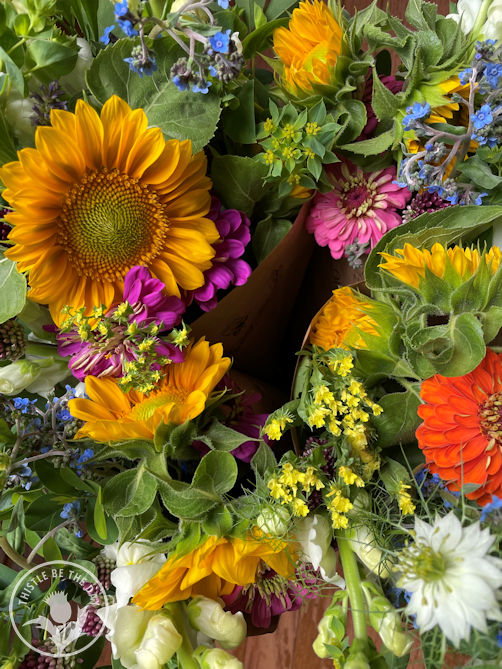
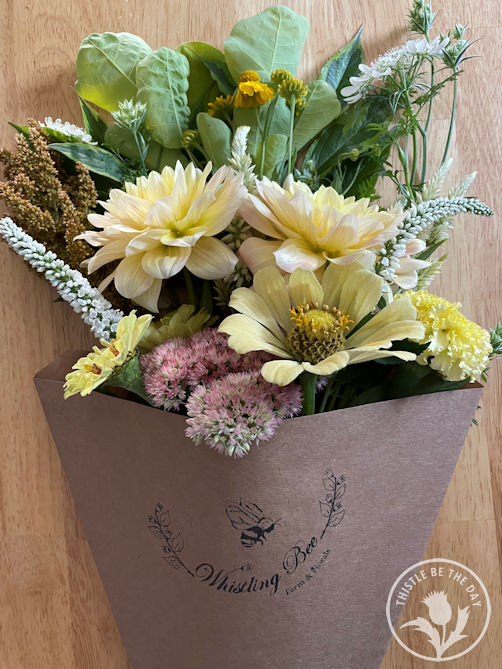
If all of these “rules” seem overwhelming, don’t worry! They are just guidelines. The important thing is to have fun and enjoy the process. Remember, flowers are inherently beautiful, and there really isn’t a way to go wrong when pairing them. You can still create a gorgeous arrangement even if you don’t follow these guidelines (and many times I haven’t). And you might just surprise yourself and make something amazing when you follow your creative path. So, don’t be afraid! Treat your flowers like living art and create a masterpiece you are happy with.
Happy arranging!
 THISTLE BE THE DAY
Wonderful, informative post! Thank you for the insights! 💐🙂
LikeLiked by 1 person
Thank you, Mitzy! Happy bouquet making!
LikeLike
🙂👏💐
Blue Rock HorsesFrederick County, Virginiabluerockhorses.com
<
div dir=”ltr”>
LikeLiked by 1 person