
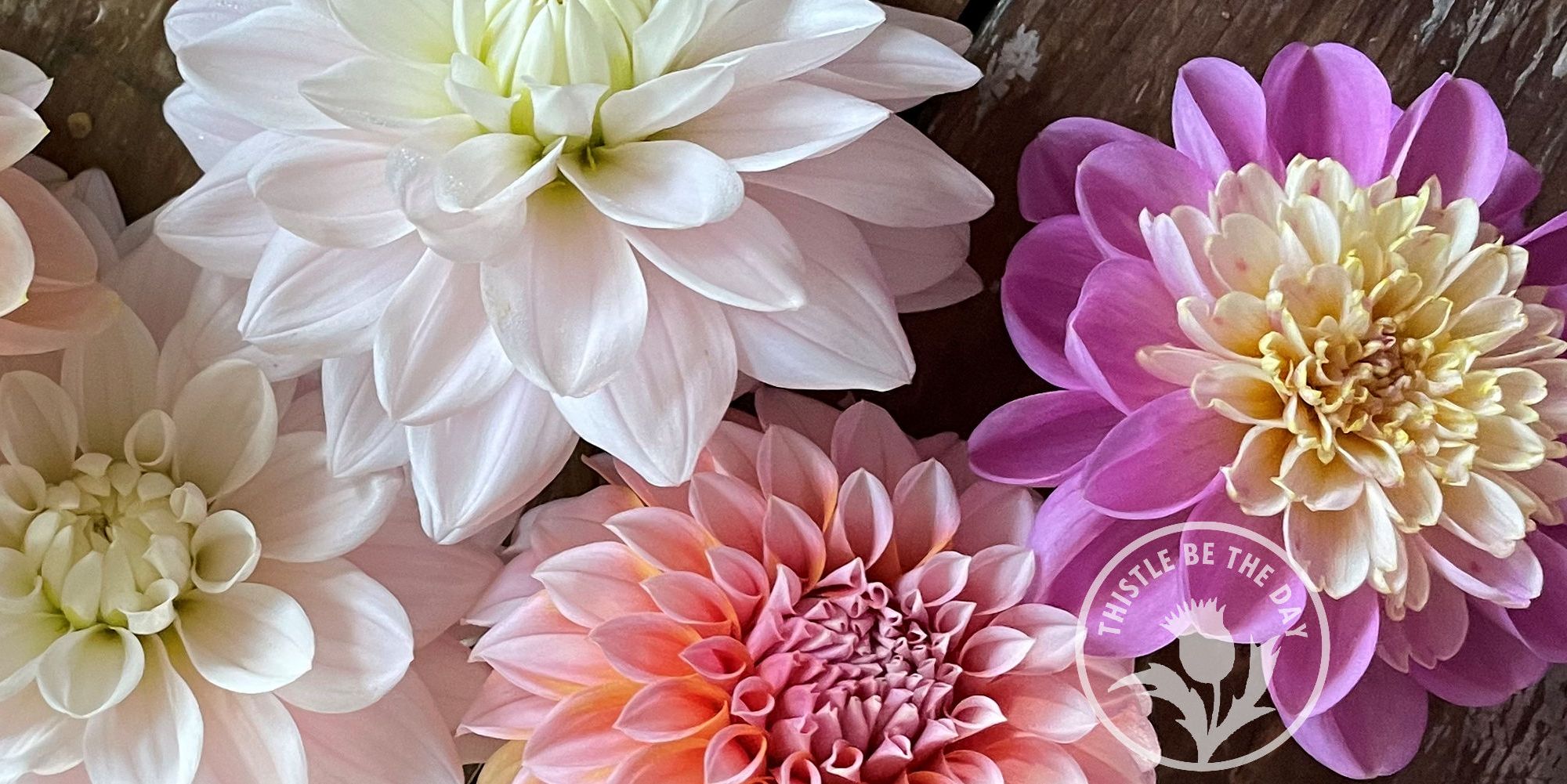
Ahh, dahlias. The queen of the garden herself. Coming in seemingly infinite colors, sizes, and forms, she is the star of the fall garden. In our northern (5b) growing zone, she can be a bit of a diva and becomes quite the labor of love to produce. I plant them out in late spring; they typically bloom in late July or early August until frost, when they need to be dug up, divided, and stored until the following season. But all the effort is so worth the beautiful blooms they provide.
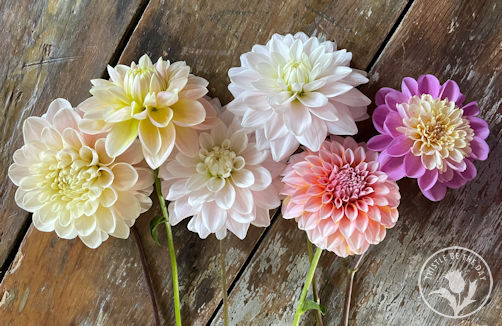
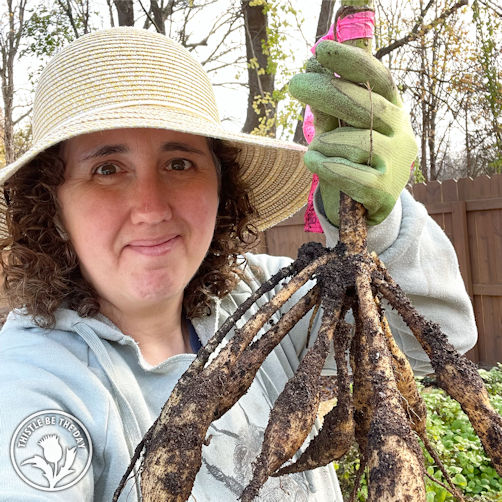
Dahlias have become highly popular over the past few years and are recognized and sought after by flower lovers. Tuber sales have increased exponentially, fetch high prices, and can be challenging to get your hands on. If you’ve ever tried to purchase tubers online during ‘Dahlia Wars,’ you know what I mean (tubers for popular varieties sell out in seconds!) Dahlia lovers almost always have a list of ‘unicorn’ varieties they hope to one day get their hands on.

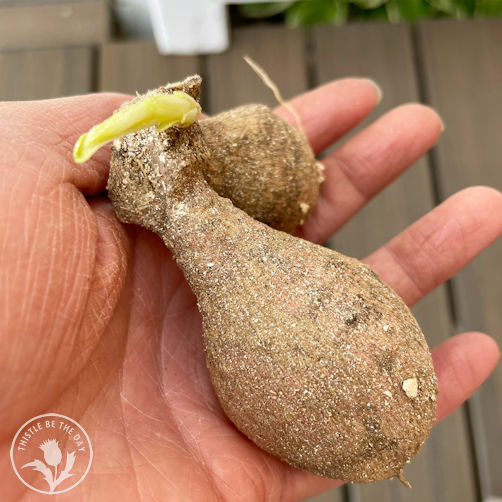
Dahlias make excellent cut flowers and look gorgeous in fresh bouquets. They don’t tend to ship well, so they can be difficult for florists to find unless they source them locally. As mentioned above, dahlia tubers (which multiply each year) are highly sought after and sell extremely well. These factors have made dahlias a popular cut flower for flower farms. Farmers can sell the flowers during the season to their customers and florists, and the tubers in the off-season.

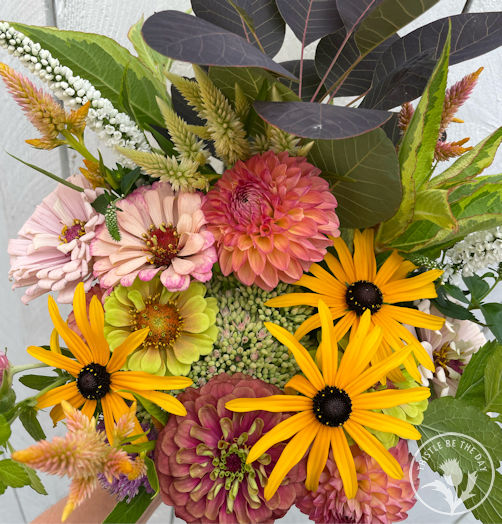
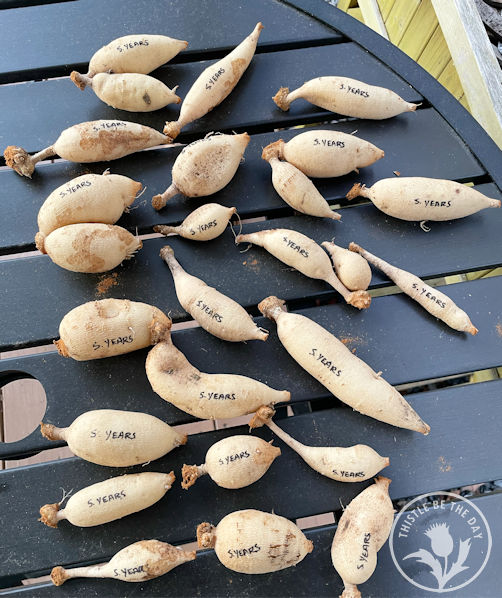
I’ve been growing dahlias for several years. If you’ve never grown dahlias before and want to try them, I warn you that they can be addictive and become quite an obsession. The number of dahlias I grow has increased significantly each year. When I first started growing them, I started with a few varieties that I thought were pretty and would look good in the garden. But, now that I sell my flowers on our farm, I need to choose varieties suited best for cut flowers. So, this season, I decided to start a Dahlia Project on our farm, trialing new varieties to determine which ones we would continue growing. I hoped to whittle our varieties down to the most productive, longest-lasting blooms and then increase our stock of those varieties for the future. So, in this week’s post, I thought I’d share the results of our Dahlia Project with you.
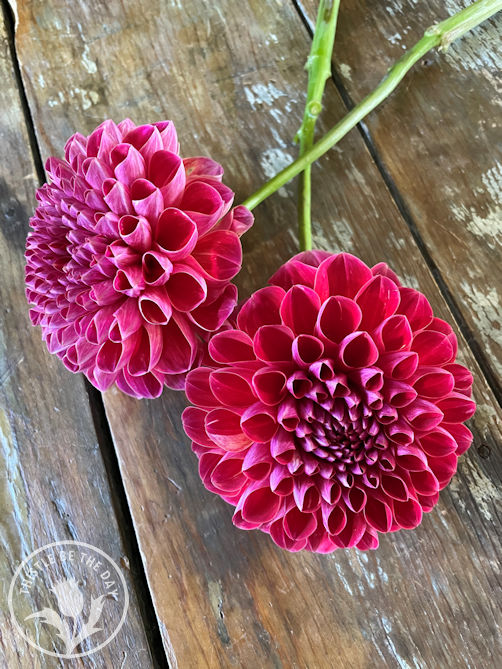


Our Dahlia Project started in the winter of 2022 when I began researching the best varieties for cut flower production. I looked to other flower farmers for suggestions of dahlias they had success with on their farms. After gathering recommendations, I made my wish list and entered the dreaded Dahlia Wars online shopping arena. Because we are a micro farm with limited space and because I wanted to trial many different varieties, buying wholesale was not an option. I didn’t need dozens of one variety; I needed single tubers of many varieties. So, I purchased my tubers from other small flower farmers rather than large companies. After navigating the onslaught of online dahlia tuber shopping, I was pleased to come away with 30 new varieties (including some of my unicorns!) to try alongside our previous year’s dahlias. In total, I trialed 42 varieties and grew 100 plants. I also grew ten new dahlias from seed to see if they would produce a new must-have variety.
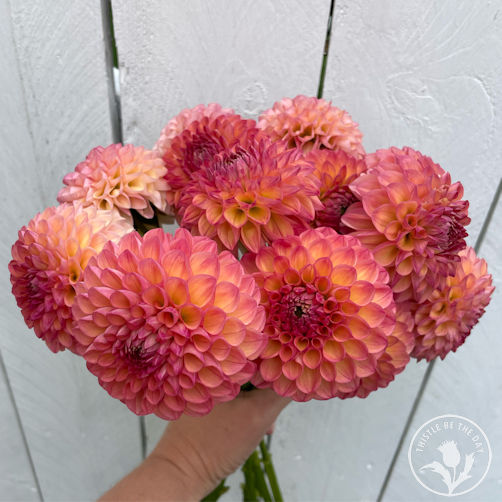

During the season, after planting our tubers, I monitored the plants for disease and took notes (and lots of photos) on flower and tuber production, color, and whether the blooms lasted in the vase. We unfortunately lost six varieties to disease (a risk you take when you purchase tubers) and another four that didn’t even sprout. So, ten of our 42 dahlias didn’t even make it through the trial. Our extremely wet weather this season could have affected these disappointing results.
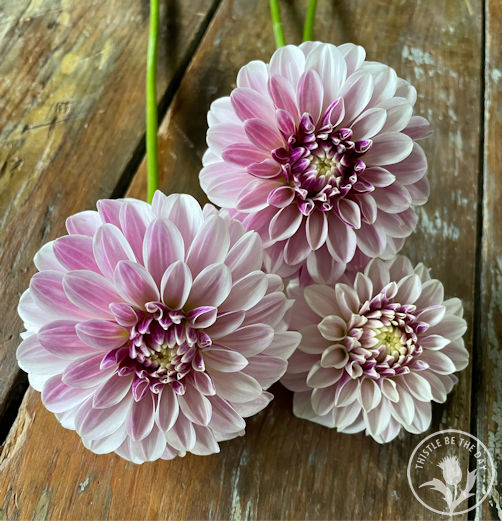
We also had other disappointments. Some dahlias, while beautiful, won’t make the cut simply because they only produced a few flowers for us all season, such as Platinum Blonde and Honeydew. I also eliminated a few varieties, including Bloomquist Sandy, Appleblossom, and Teddy, because the bloom color wasn’t quite what I expected or didn’t complement the color palette we grow here on the farm. Others won’t return next season for various reasons, such as Gingersnap, Holly Hill Miss White, Blizzard, and Small World. I’m still on the fence about others, such as Iced Tea, October Sky, Moor Place, and Bracken Rose and Sarah, because they didn’t necessarily sway me either way. I may grow them out for one more season before deciding. I must make my final grow list after seeing how all the tubers store over winter.
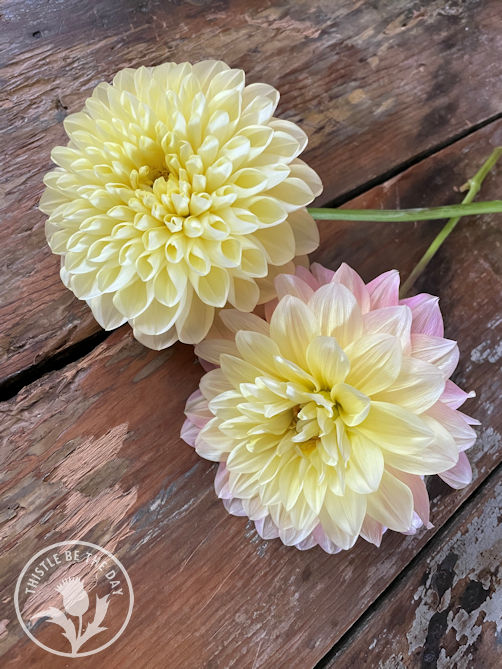
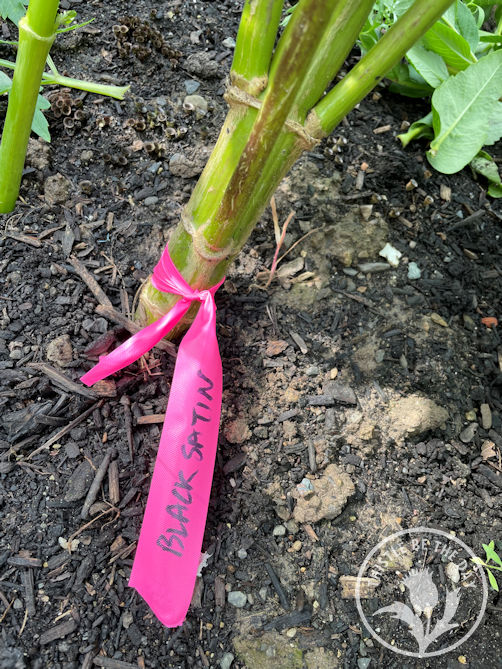
Of those that remained, many stood out, giving us loads of blooms with strong stems that held up well in bouquets and produced many tubers. These included Peaches N Dreams, Silver Years, Robin Hood, Sheer Heaven, Cornell Bronze, Jowey Linda, Jowey Winnie, Ivanetti, Isabel, Sweet Nathalie, Peaches N Cream, Black Satin, Alpen Cherub, and Camano Zoe. For pom pon varieties, standouts were Betty Anne, Little Scottie, Frank Holmes, Dot Com, and my absolute favorite, La Dee Da. Overall, the varieties that surprised me the most in our Dahlia Project were Jowey Linda, Black Satin, La Dee Da, and Peaches N Cream. Whether it was their form, color, or productivity, they were absolute gems and keepers.
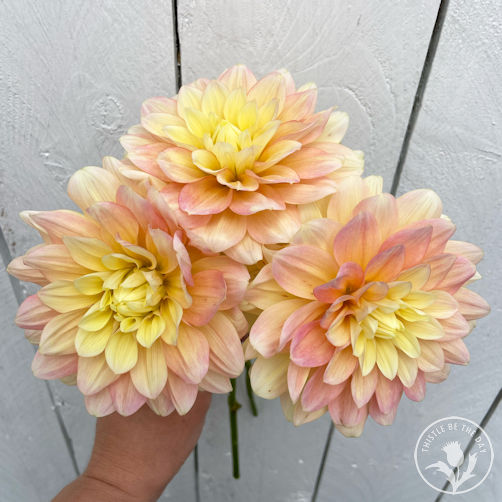
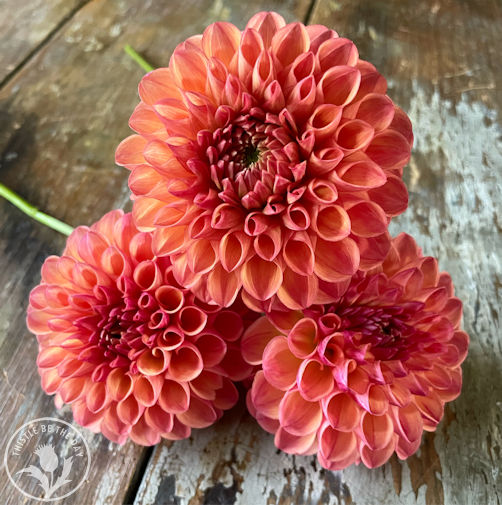
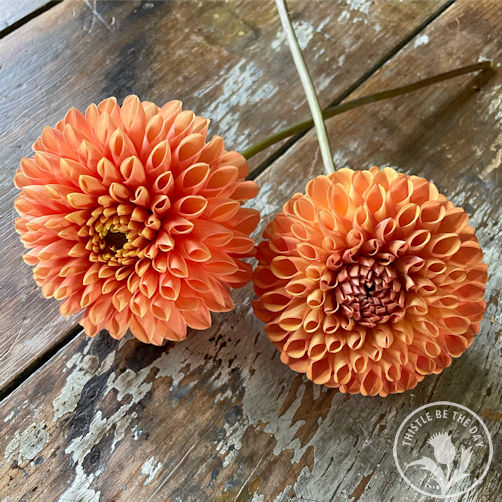
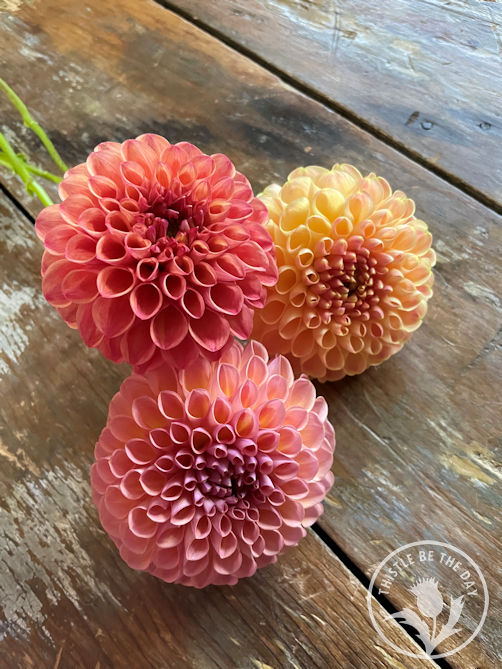

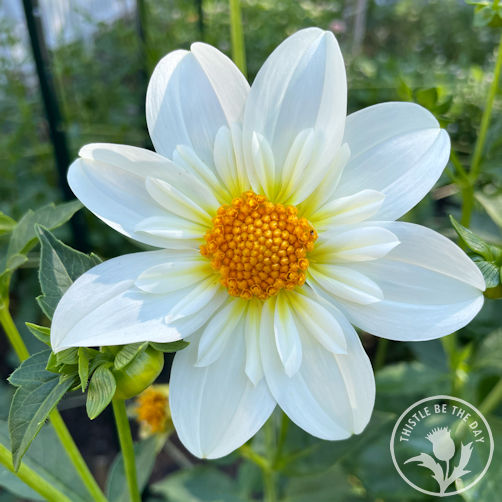
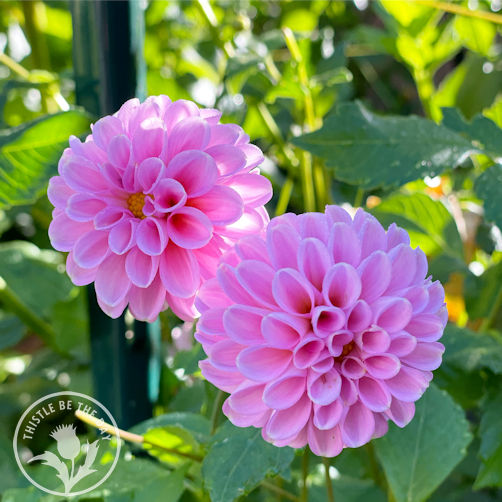
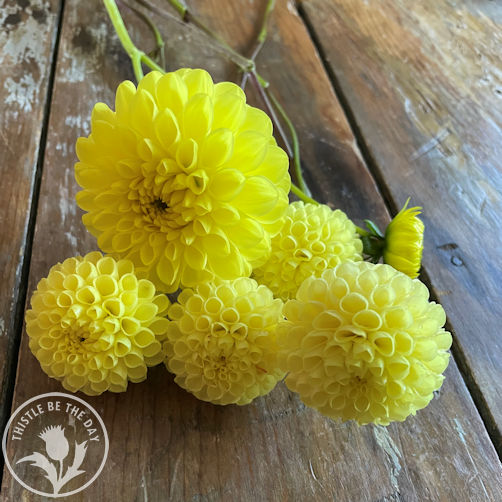
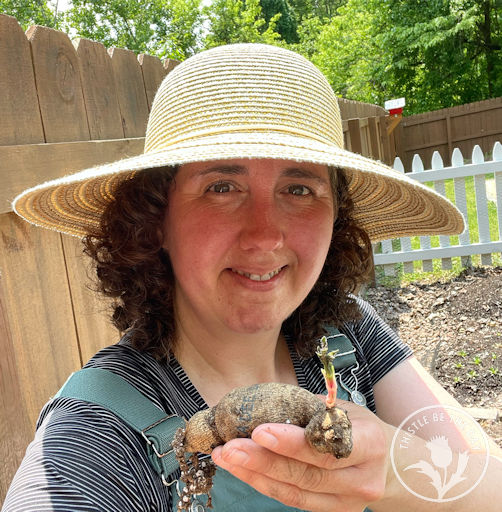
Regarding tuber production, Cornell Bronze, La Dee Da, Jowey Winnie, Isabel, Black Satin, Coseytown Gale, and Peaches N Cream were clear standouts in our trials, producing 7-9 tubers per plant.
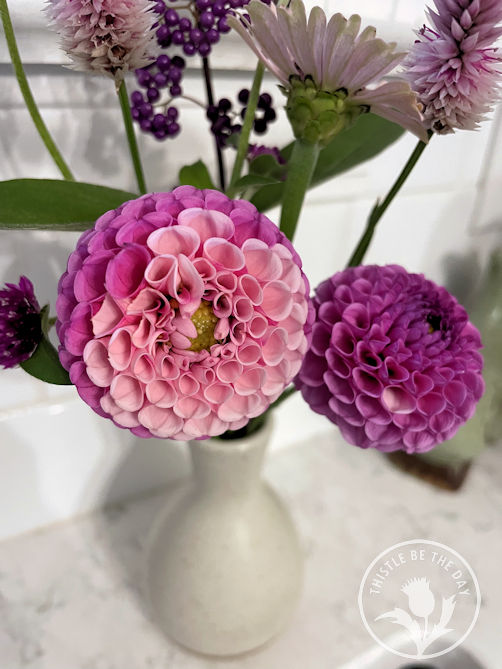
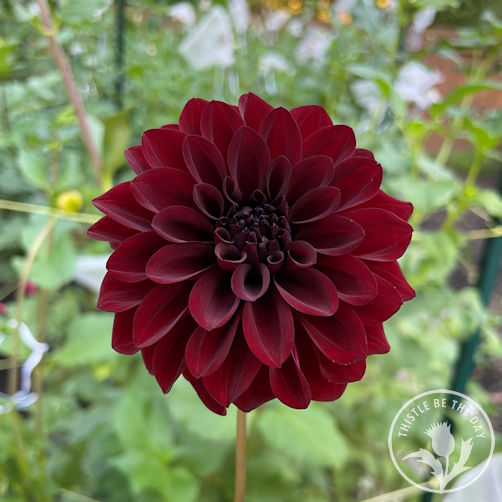
Two of the ten dahlias we grew from seed also made the cut, along with a seedling we’ve been growing for the past three years. These three varieties only exist here on the farm! We will continue to grow them for several years to ensure they are stable before sharing them with the world.
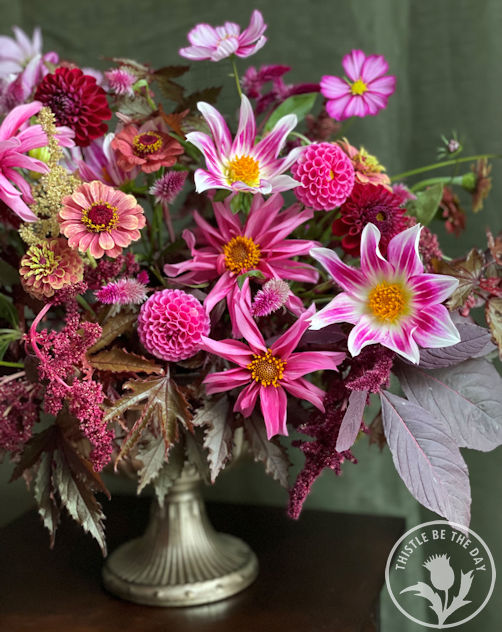
These results were based on my trial on our farm and my experience this growing season. There are many factors at play here. So, don’t let my results dissuade you from growing a particular variety. If you are a home gardener looking to grow dahlias, go for any variety that catches your eye. Go ahead and do your own trial; you might get different results. Making dahlia decisions is difficult, as so many are beautiful and worthy of growing. The gardener in me wants to save and plant them all. I wish I had the space to do just that. But the farmer in me knows I have to choose the best varieties for the farm. I still have a lot of decisions to make before next season, and it won’t be easy. Wish me luck!
If you have a favorite dahlia you grow, I’d love to hear about it in the comments below!
 THISTLE BE THE DAY
Thanks for sharing your results! My favorites (reliable, disease resistance, stem length, productivity etc.) are Sylvia/Maarn (sold by both names) Naomi, Star Elite, Star’s Favorite. I grew about 180 this year, but am reducing the number of varieties greatly in the coming season. Had not planned to add any, but now Robin Hood is tempting me!
LikeLiked by 1 person
All of those varieties look beautiful! I’m also trying to reduce the number of varieties I grow, but it’s so hard when they’re all so gorgeous. Robin Hood is worth growing; you should let it tempt you!
LikeLike
Just discovered this post and you pretty much sum up my love/hate (mostly love) relationship with dahlias. They are such divas, but we love them for a reason.
LikeLiked by 1 person
Thank you, Ellerie! Dahlias are hard not to love, even when they’re divas. Ha ha!
LikeLike
I have so many questions and comments!
LikeLiked by 1 person
Oh I have so many comments and questions! so I am in the Pacific Northwest actually very close to Triple Wen farms or at least where they were. I have a question about dahlia tuber production because you said 7 to 9 tubers is good production. There were most of mine that had at least 20 if not up to 60. Do we produce more tubers in our area? I have heard that before. I myself have a few thousand dahlias growing at the moment. This number continues to grow because of the amount of tubers we get. I read an article last year that said someone would be lucky to get five tubers and I found that odd seeing how many I got year after year. Also about your hybridization program. Did you take any of the dahlias and grow them from seed seeing what you can get? Also how do you mix the dahlias? I have grown them from seed into tubers and found different varieties but I don’t know much about it.Your flowers are so beautiful and I love reading all about your farm.Thank you for sharing!Lots if love Keely
LikeLiked by 1 person
Hi Keely! Thank you for reaching out. Wow, your dahlia tuber production is impressive! And yes, I believe that your location and environment can definitely be a factor in this. Also, certain varieties produce more tubers than others. I bet your dahlia beds are amazing with your thousands of plants! And, they must be very happy! Yes, I start all of my hybridized dahlias from seed and keep detailed records as they grow. If I see a seedling that has potential, I keep the tubers and grow it out for a few years to see if it’s a keeper. I’m still learning about and experimenting with the process of hybridizing. Currently, I’m reading the book by Kristine Albrecht called Dahlia Breeding for the Farmer-Florist and Home Gardener. It goes into detail about how to hybridize and breed dahlias. Triple Wren Farm also has a lot of great information on the topic as well. I hope to experiment with creating some crosses this season. Thank you for your kind words and for reaching out. I’m glad to know you enjoy reading about our farm! Happy growing and enjoy all of your dahlias!
LikeLike