
Do you know how, when you watch a show or a movie, sometimes they have warnings to let you know that there is graphic content or strobe lights? I should include a warning with this post because this isn’t my usual feel-good, pretty picture kind of post. You see, our farm is being invaded, and I feel like I’m in a horror movie.
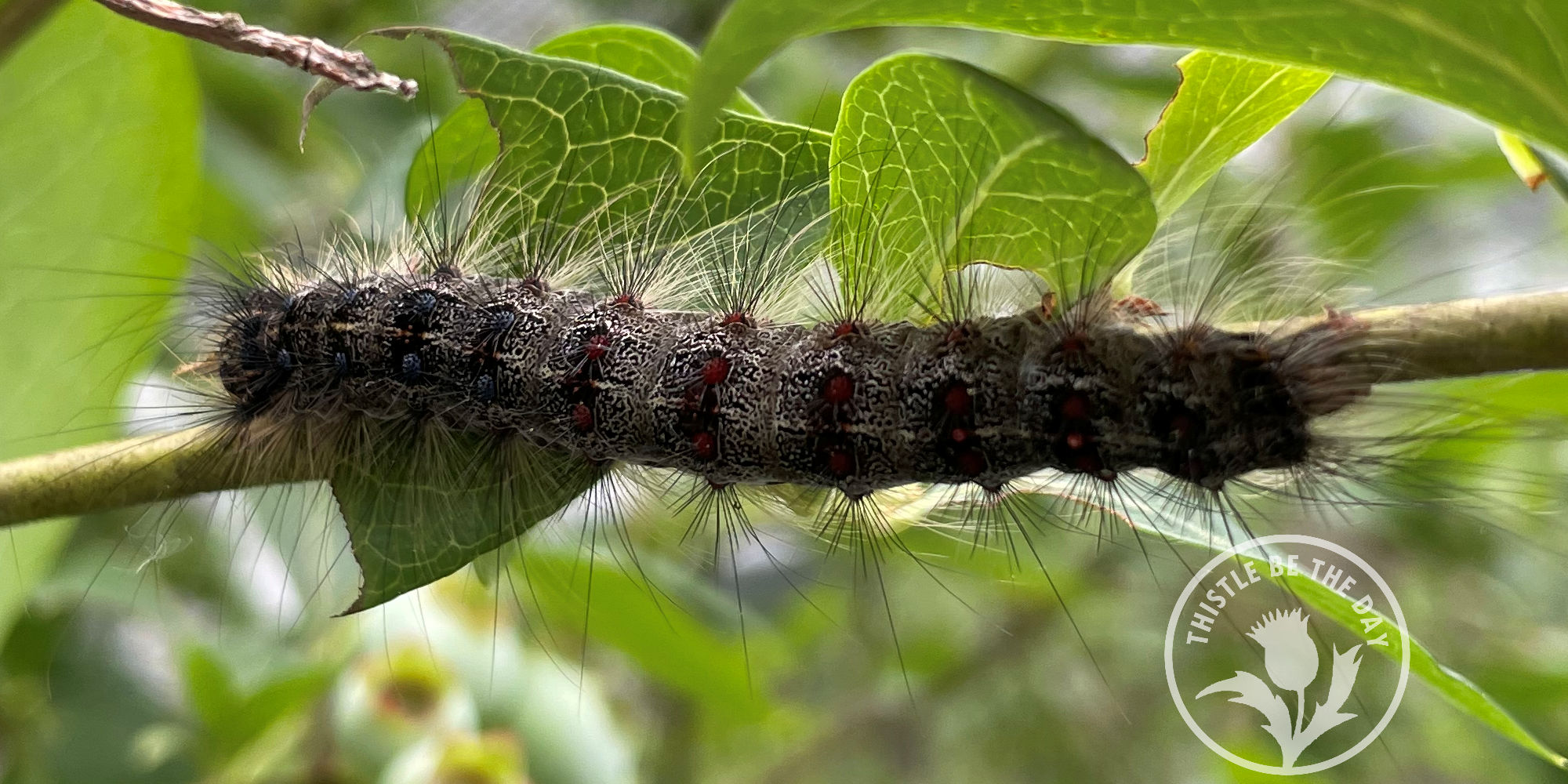
The villain in this story may be relatively small, but the massacre it leaves behind is of epic proportions. I’m talking, of course, about the Spongy moth. These invasive moths have periodic outbreaks that come in cycles and can last several years. The last outbreak in our area was in the early 1990s, and now we are experiencing another in the Hudson Valley of New York.
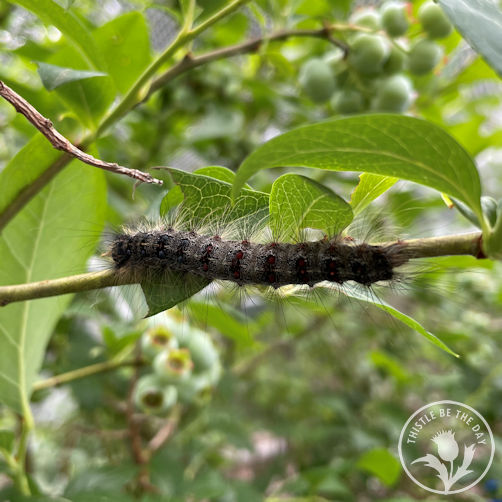
Spongy moths (formerly Gypsy moths) are native to Europe and were imported to North America in the late 1860s by an entomologist hoping to breed a cold-hardy silk moth. The Spongy moths escaped and have been wreaking havoc on our forests ever since. Due to their non-native status, these moths have relatively few predators. Cuckoos are among the few birds that will eat hairy caterpillars in our region. Smoky shrews and caterpillar hunter beetles will also eat the caterpillars and the pupae. With few natural predators and the sheer number of caterpillars, unless they succumb to viral or fungal disease, this species often goes unchecked in our forests, defoliating massive amounts of trees.

Millions of tiny caterpillars in the Hudson Valley hatched and ballooned on silken threads in late April and early May. They use this method of transportation to avoid intense competition for food. Having millions of caterpillars “flying” through the air caused quite a commotion. Outdoor events were canceled, and people stayed indoors to avoid coming into contact with them. The hairs, or setae, on these caterpillars, can cause severe rashes and skin irritations for some people. It was an alien invasion, and people were miserable.
The damage these caterpillars are causing is devastating. Trees are completely defoliated, and so infested that you can hear the caterpillars munching when you stand near one. But don’t stand too close, as these eating machines also drop large amounts of frass (aka caterpillar poop). Healthy trees will survive this defoliation and send out a flush of leaves in July. However, if other stressors are present, such as drought conditions, pests, or diseases, some will not survive the 8-week feeding frenzy.
Spongy moth caterpillars prefer oak trees as their food source. However, they will eat the leaves of over 300 species of woody plants, and it turns out that our blueberry patch suits their dining needs. I was horrified to discover hundreds of Spongy moth caterpillars taking up residence on our bushes, using them as an all-you-can-eat buffet! Blueberries are my favorite edible to grow (sorry, tomatoes and peppers, you’re a close second), so when I discovered they were causing severe damage to our bushes, I declared an all-out war against these alien invaders. Also, I had sold out of our Berries & Blooms CSA subscriptions, and I didn’t want to disappoint our members by not having berries to go with their blooms!
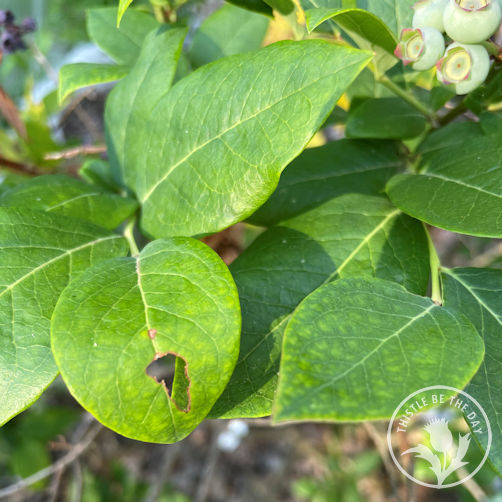
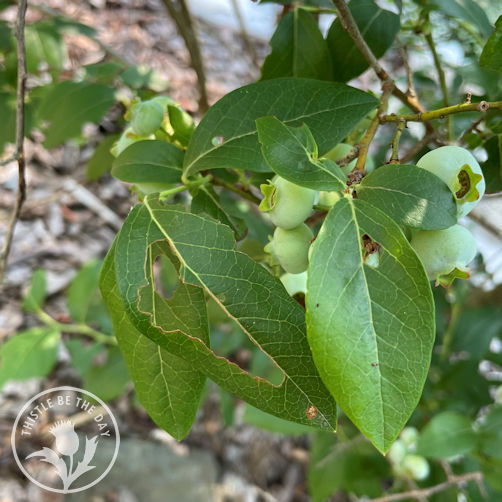
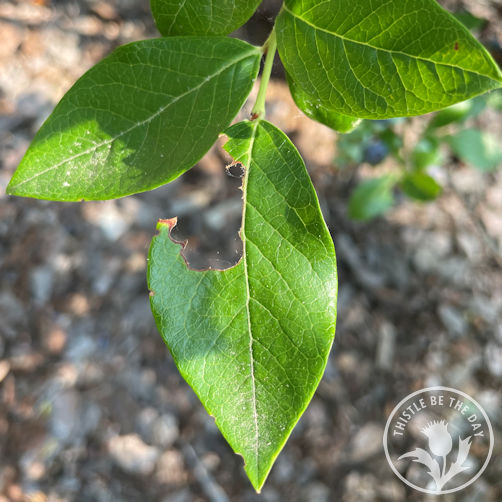
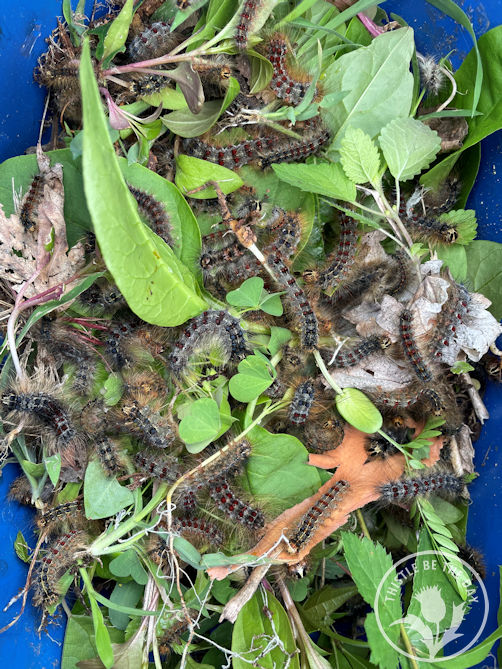
Since we are a no-spray farm, I didn’t want to use chemicals to kill the invaders. Unfortunately, that meant daily patrols with a bucket of soapy water, knocking any caterpillars I found into the bucket. To say this was not my favorite farm chore would be an understatement. I’ll admit that I can be a tad (okay, more than a tad) squeamish when dealing with specific pests. There is no denying that having a bucketful of dying caterpillars was gross, like wanting to vomit gross. But it was necessary to save our berries, so I powered through my gag reflex and got the job done each day.
After a week of diligent hand-picking, I noticed it was making a difference. I found fewer caterpillars daily, and the bushes started sending out new foliage. I cautiously began to feel triumphant. Did I survive the alien invasion? And did I save our blueberry season? Well, I’m happy to report that we have successfully started harvesting berries! I also started our Berries & Blooms CSA this week, with members receiving blooms AND berries. So, I think the answer to both questions is ‘Yes!’
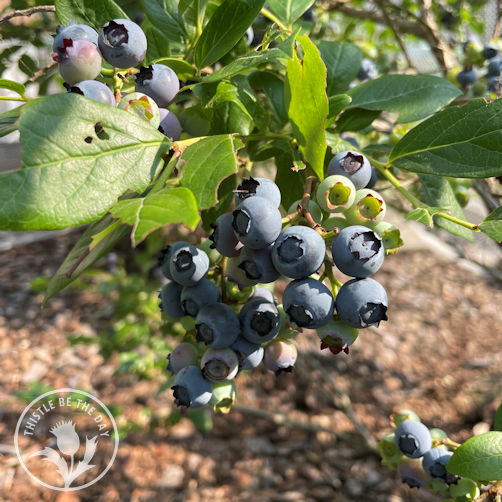
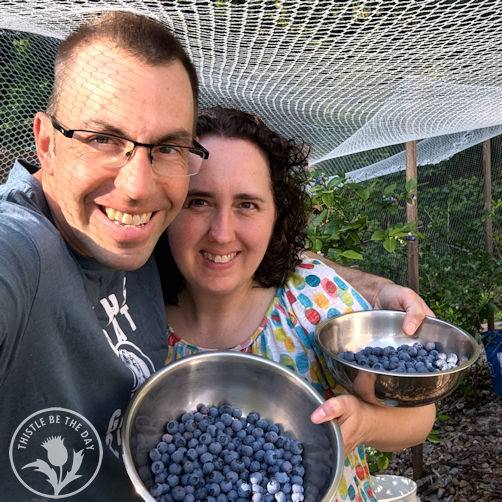
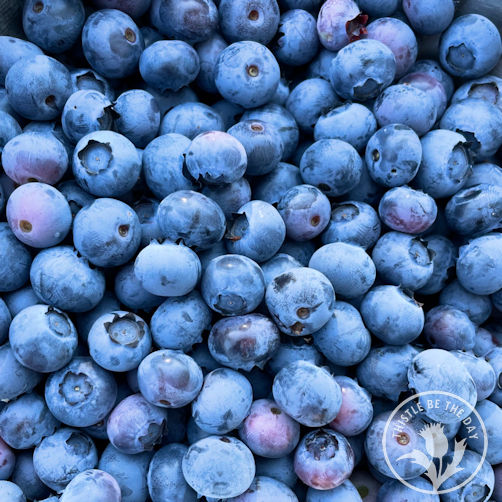
Now that it is late June, most larvae will have completed their development, meaning the feeding frenzy is over. After they pupate, emerging as adult moths, they will mate and lay egg masses that will overwinter on trees. Unfortunately, that means we’ll probably deal with another invasion next spring. But I survived this season, and now that I know what to look for, I’ll have my bucket of soapy water ready.
Source: Spongy Moth Q & A
 THISTLE BE THE DAY
You our brave Dawn. I have not been able to do anything in my front yard for weeks. There are 20 oak trees dripping with grass. Yuck!!! Glad you and the berries survived!!
LikeLiked by 1 person
Thank you for your kind words. I’m so sorry to hear about your oak trees. Hopefully, you’ll be able to get out to your front yard again soon.
LikeLike