
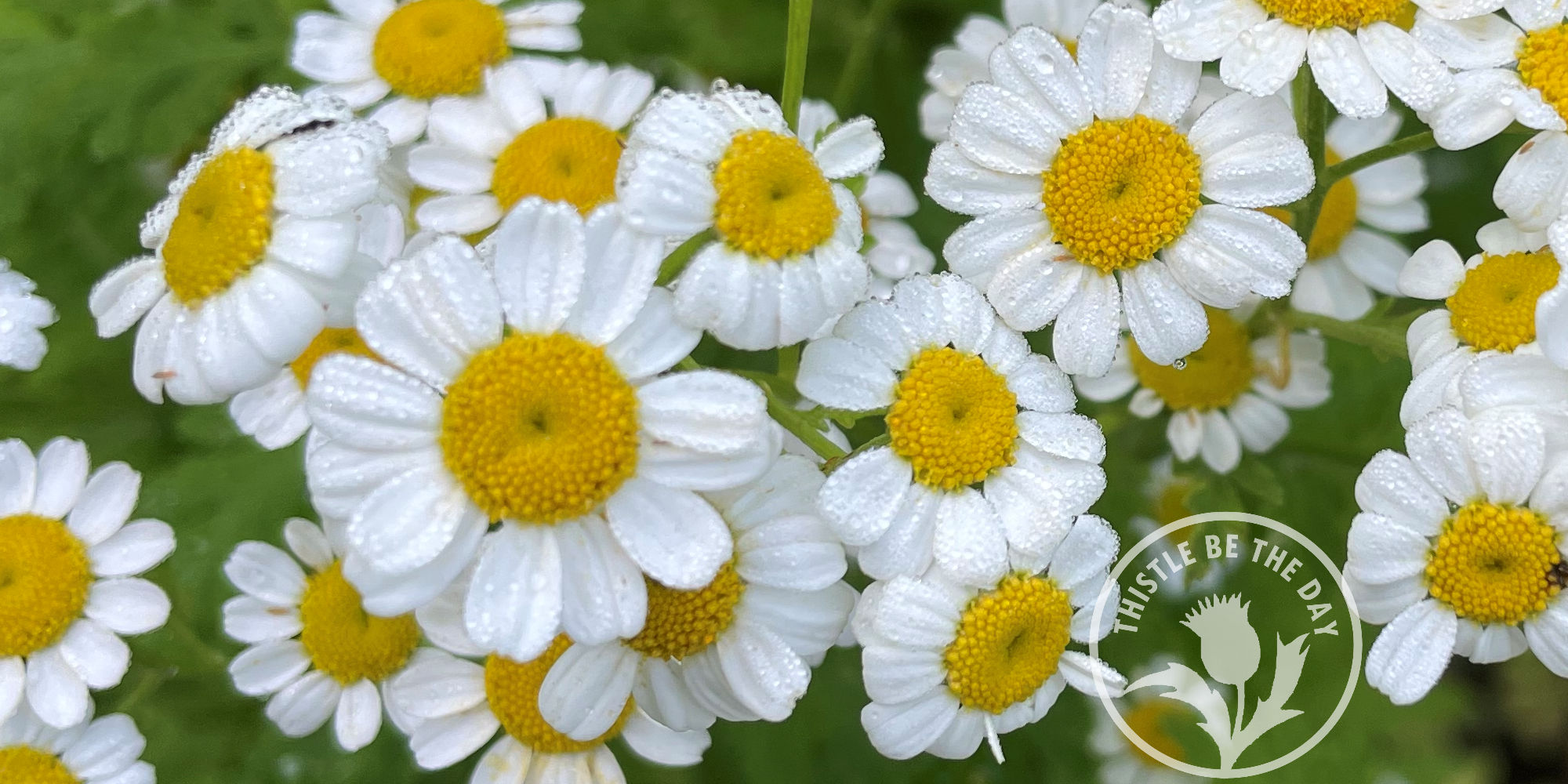
It’s been a while since I’ve put a plant in the spotlight, and I was reminded of that this week while I was admiring our feverfew during harvesting. The feverfew is blooming profusely on the farm right now, and I have become quite smitten with these dainty, whimsical flowers. So, I’m featuring these beautiful blooms in our blog post today, because I decided that Thistle Be the Day they get their moment in the spotlight!
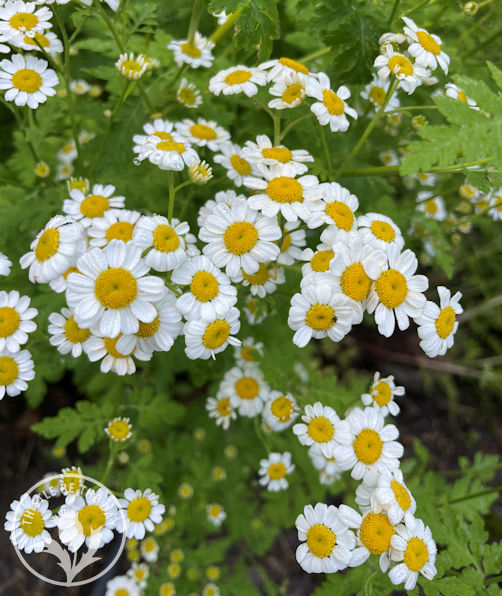
First, some history. Feverfew (Tanacetum parthenium) is a member of the daisy family, Asteraceae, and is an herbaceous flowering perennial hardy in USDA growing zones 5-9. It originated in the Balkans region and is native to southeastern Europe, the western Himalayas, and Central Asia. The genus name, Tanacetum, is derived from “Athanasia,” a Greek word meaning immortal. Other common names associated with feverfew include bachelor’s or bride’s button, maids, manzanilla, midsummer daisy, and wild chamomile.
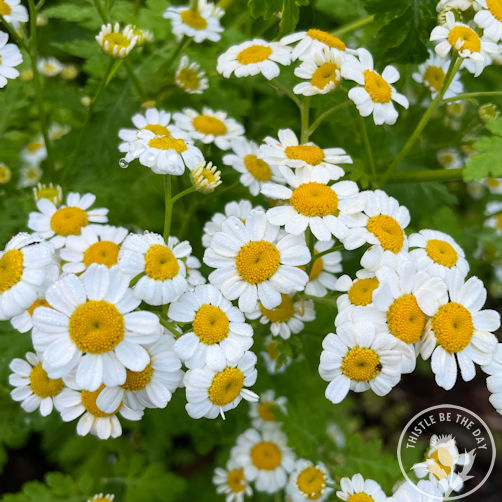
While feverfew is closely related to chamomile, the main difference is that feverfew plants are more upright, and their leaves are used herbally. Chamomile plants tend to grow facing downward, and their flowers are used herbally.
Popular as a medicinal herb dating back to the reign of Charlemagne in 812 AD, feverfew was used to reduce fevers. Other uses included as a sedative, to reduce the number and severity of headaches, and even as an insecticide. Modern medicine opinions vary on its effectiveness and safety, but traditional medicine still uses the herb today. However, it is always recommended to consult a medical professional before taking herbal supplements, such as feverfew. Besides medicinal use, feverfew was also used to dye wool and to purify the air around homes with its spicy scent.
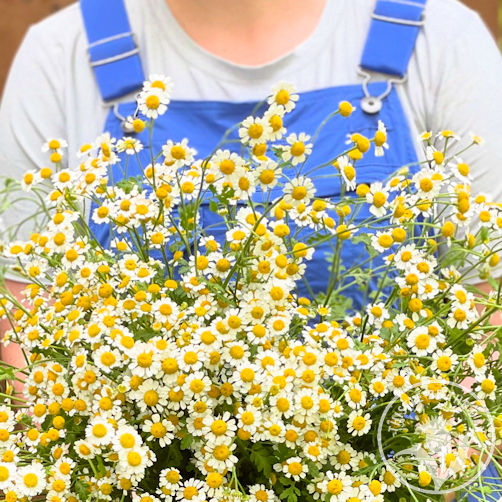
Flowering mid-summer through fall, feverfew grows 2-3 feet tall and produces dainty daisy-like flowers. The foliage is fern-like, lacy, and highly aromatic. Feverfew prefers full sun to partial shade and well-drained, moist soils. They will grow in loamy or sandy soil and tolerate a range of soil pH levels. They do self-seed and will spread if not kept in check. Deadhead spent blooms if you don’t want to deal with “volunteer” feverfew plants next season. The plants are drought-tolerant and deer-resistant, with few diseases or pest problems.
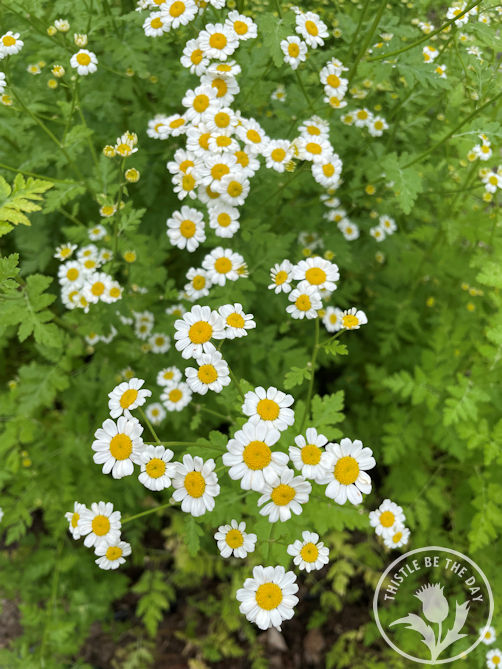
There are several cultivars, including both single and double-flowering types. Flowers can be daisy-like or rounded balls arranged in flat-topped, convex clusters called corymbs. Bloom colors range from white to cream and yellow. Plants can be easily grown from seeds, divisions, or cuttings. Blooms attract beneficial insects, butterflies, bees, and hummingbirds, making it an ideal plant for pollinator gardens, meadows, or naturalized areas. However, feverfew also works well in cottage, rock, or cutting gardens, or as a container plant on a patio.

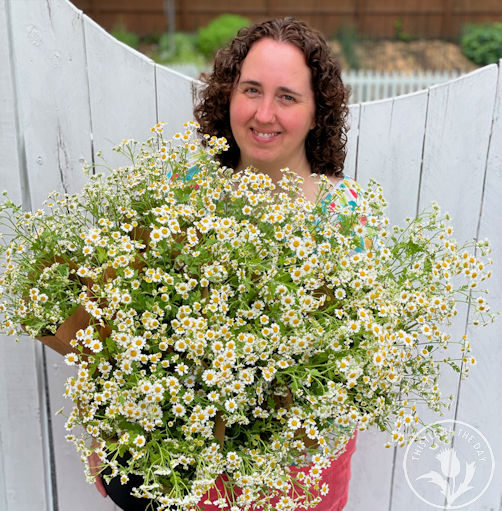
I started growing feverfew as a cut flower in 2024. They make fabulous cut flowers as they are long-lasting, and their branching habit makes them ideal filler flowers for bouquets. I love the way the whimsical mini daisy-like flowers look in our bouquets, and they pair well with any color palette. They bloom in early summer, but if picked hard, you can get a second flush of flowers in the fall. I started our feverfew last season from seed and planted the seedlings out in early spring. I got a respectable harvest the first season. The plants overwintered, and this season they bloomed prolifically.


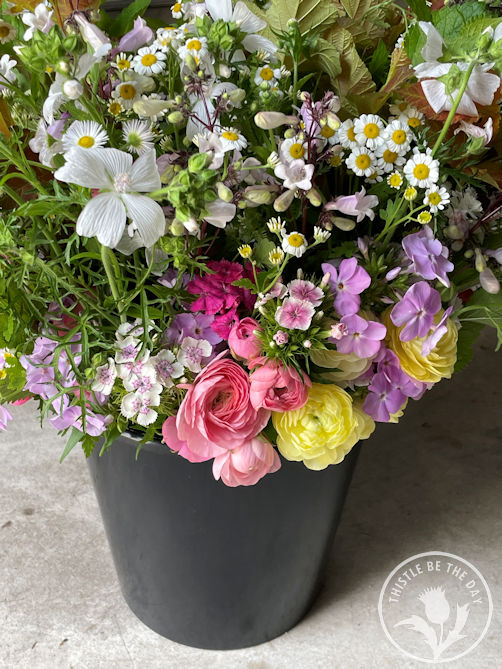
Feverfew should be harvested when one-quarter to one-half of the flowers on a spray are open. They can be wilt-prone, so cut them early in the morning before the heat of the day, and it’s recommended to dip them in a hydrating solution or hot water for a few seconds before putting them immediately in cool water. Feverfew flowers are known to be “dirty flowers,” turning the water in the vase murky. Therefore, it is recommended to add a few drops of bleach to the water and change it frequently to maintain cleanliness.
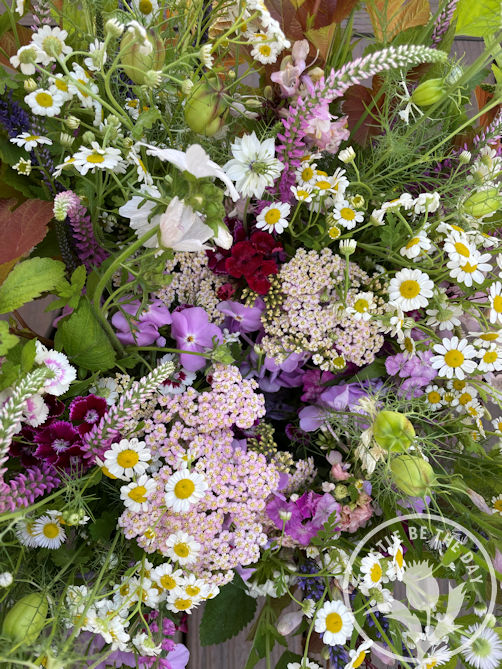
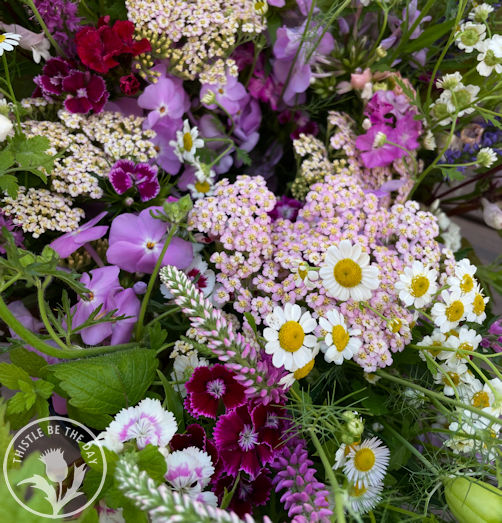
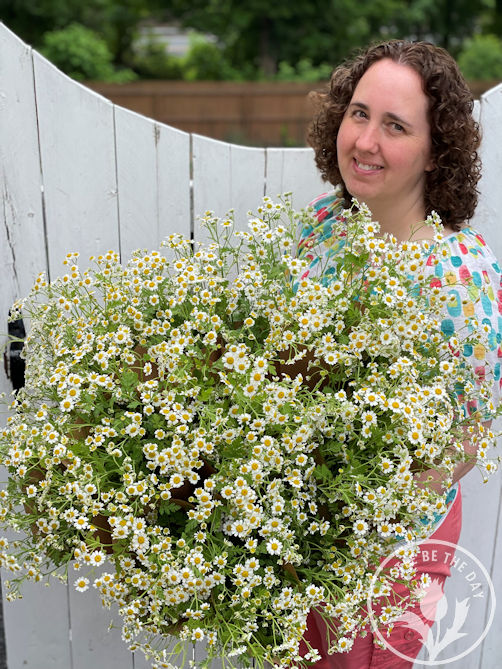
Feverfew flowers and stems also dry well, especially the double-flowering types. They look lovely in dried floral arrangements well after the growing season. So, make sure to cut and dry a few stems during the season to enjoy after the flowers in the garden have faded.
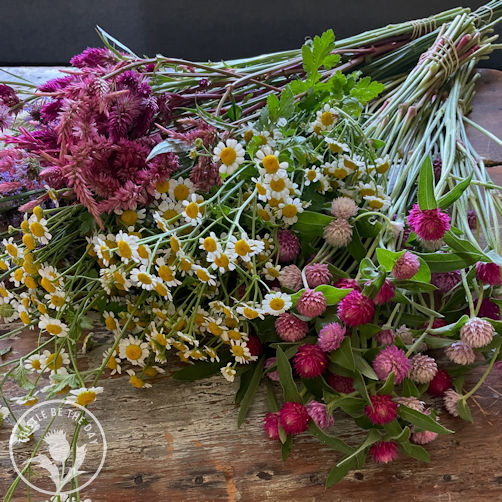
After growing feverfew for the past two seasons, I can’t imagine not having it growing here on the farm. Not only is it useful as a cut flower, but it also attracts and supports a wide variety of pollinators and beneficial insects, which helps to maintain the biodiversity on our farm. And the fact that it is a drought-tolerant, deer-resistant, low-maintenance flowering perennial certainly helps too! If you haven’t yet grown feverfew in your garden, I highly recommend giving it a try. I think you’ll enjoy all the benefits of growing this beautiful plant in your garden.
Sources: Feverfew, Herb of the Week, Extension Gardener
 THISTLE BE THE DAY