
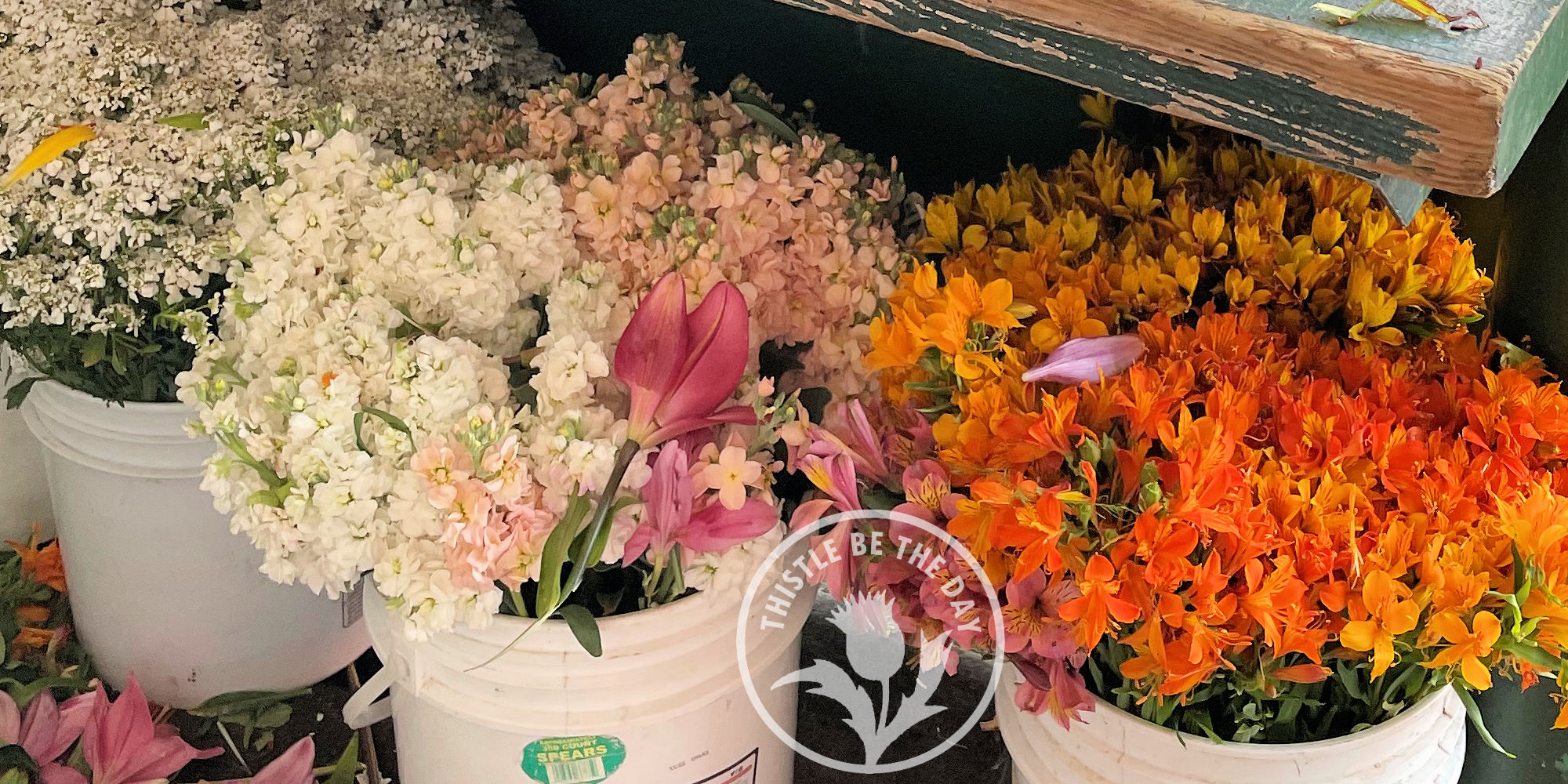
This past July, we took a trip to Seattle, Washington, as my son was competing in the Rubik’s WCA World Championship there. It was a fabulous trip, and in between competing, we were able to explore the city. We had never been to the West Coast, and it was exciting to soak in all that Seattle had to offer. We spent our days visiting the iconic Space Needle and the flagship Starbucks store, taking in a Mariners and Sounders game, and packing in as many experiences as we could. I previously shared our field trip to the fabulous Chihuly Garden and Glass, but today I’d like to share our visit to the famous Pike Place Market.

The Pike Place Market has been a true Seattle icon for more than a century. Spanning nine acres in the center of downtown, the Market is home to hundreds of crafters, farmers, and small businesses. As the city of Seattle grew in the early 1900s, so did the demand for fresh produce. Farmers at that time would sell their crops to wholesalers, who would then sell the produce to the public. This “middleman” method of selling left little to no profit for the farmers. In the summer of 1907, a city councilman proposed creating a public marketplace where customers could purchase goods directly from farmers, thereby eliminating the commission houses that served as intermediaries. The new public market was wildly popular, and the farmers earned fair prices for their produce. In 1908, an outdoor plaza was added at the foot of Pike Street, where the world-famous Pike Place Fish Market’s fishmongers now reside.
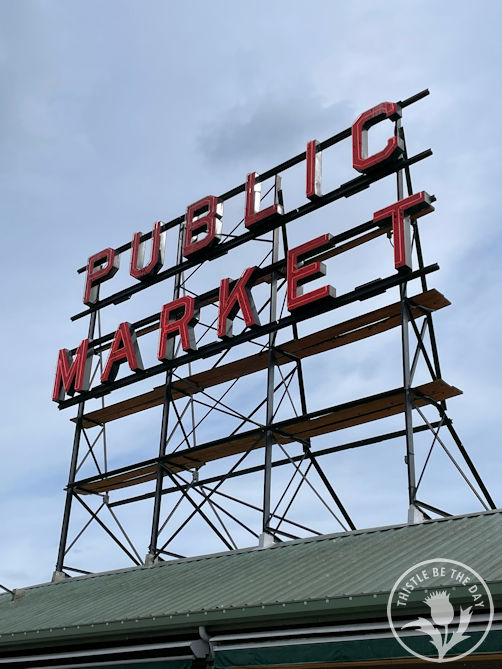
The Market remained popular throughout the 1920s and 30s, expanding to showcase over 600 farmers by the start of World War II. The Market’s “Meet the Producer” credo of assigning space only to those who “raised, produced, or manufactured the goods they offered,” remains today. Currently, more than ninety Washington state farmers sell their fresh flowers, produce, and specialty products year-round at the Market. During the peak summer months, a handful of satellite farmers’ markets have been operating in downtown neighborhoods since 2009.
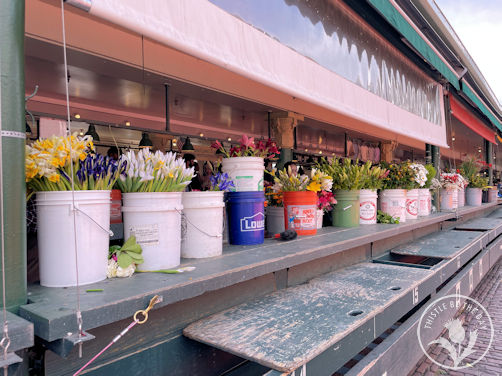
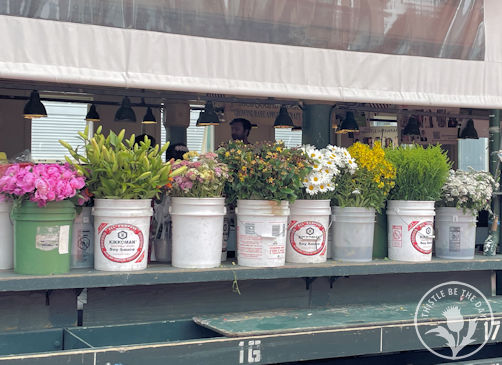
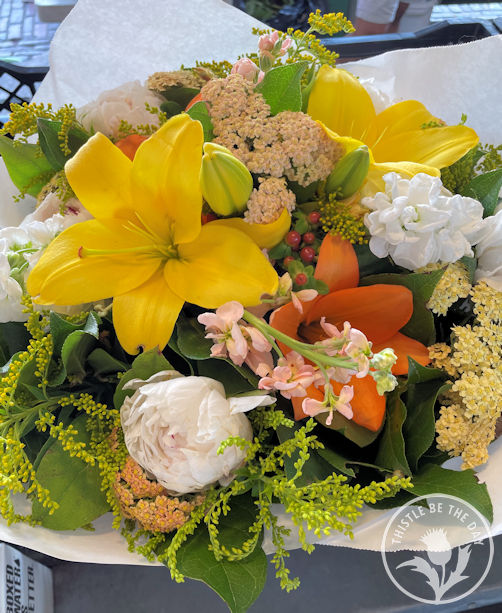
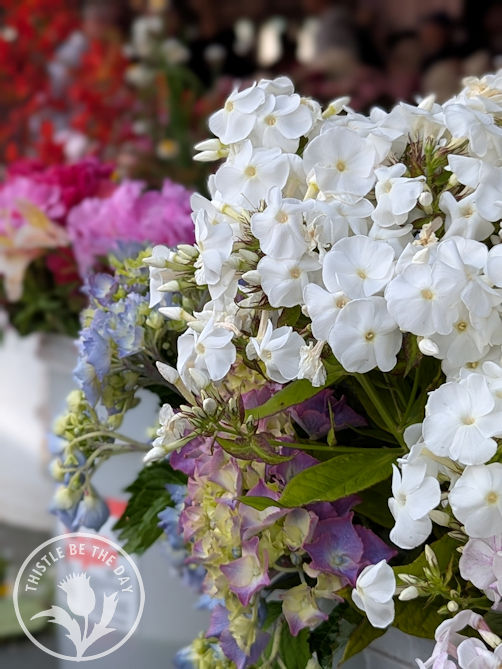
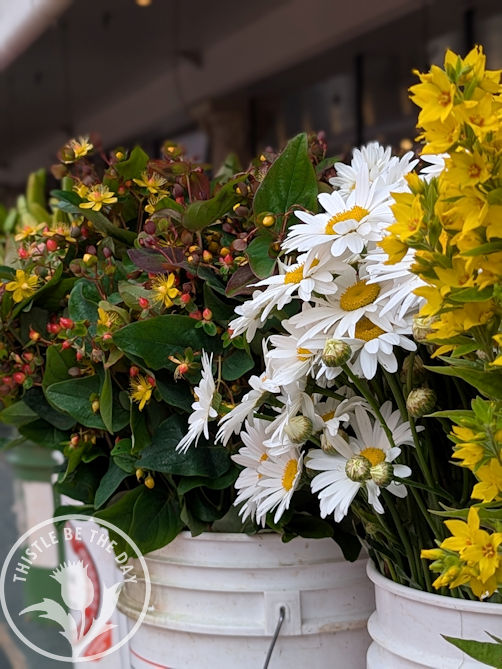
When we visited the Market in July, it was indeed bustling. While a wide array of products were being sold, from produce to handcrafted jewelry and clothing, I, of course, was most interested in the fresh flower portion of the Market. Several flower farms were selling their fresh-cut stems at the Market to throngs of customers, lined up to buy their flowers. I was amazed at the volume of flowers brought and sold in the short time we perused the many Market stalls. I watched with fascination as the sellers made bouquet after bouquet in record time, trying to keep up with demand. They spun the bouquets in their hands with ease, adding fresh stems from dozens of buckets at their feet. It took them less than a minute to create a mixed bouquet, wrap it, and place it in buckets for sale. I definitely admired these flower farmers’ bouquet-making skills!
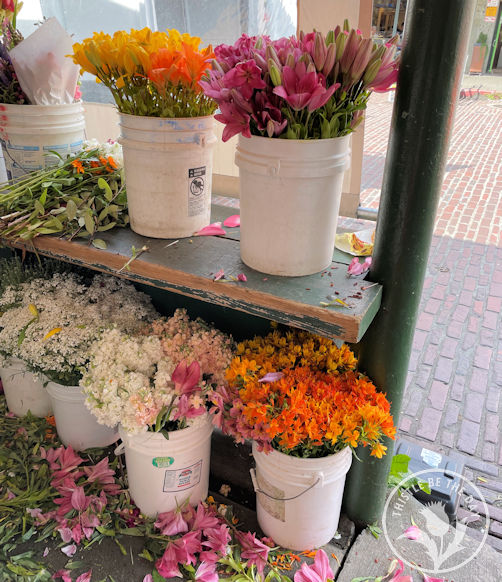
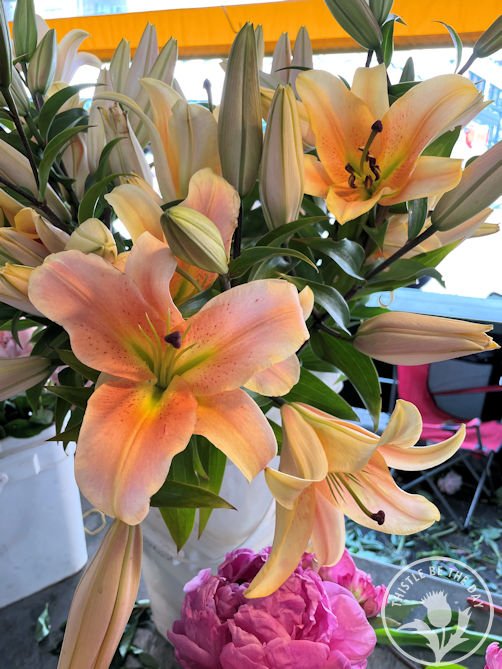
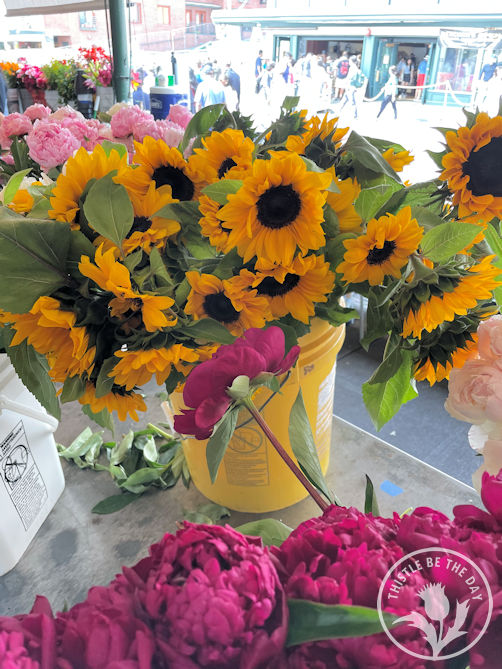
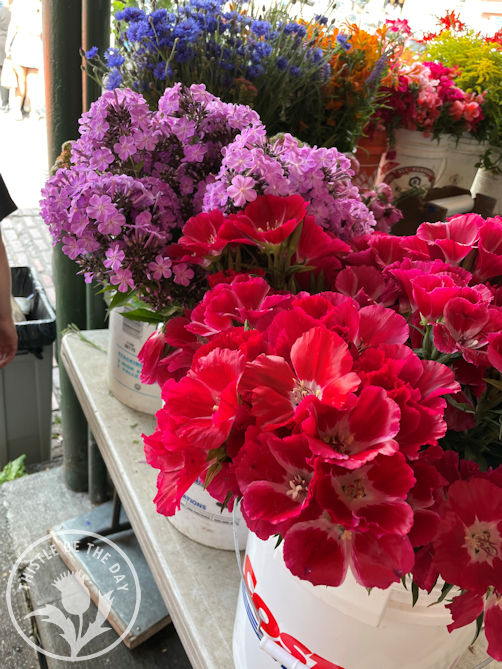
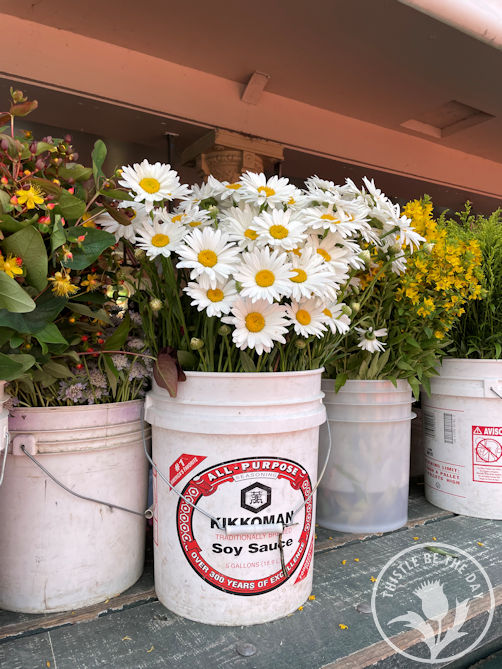
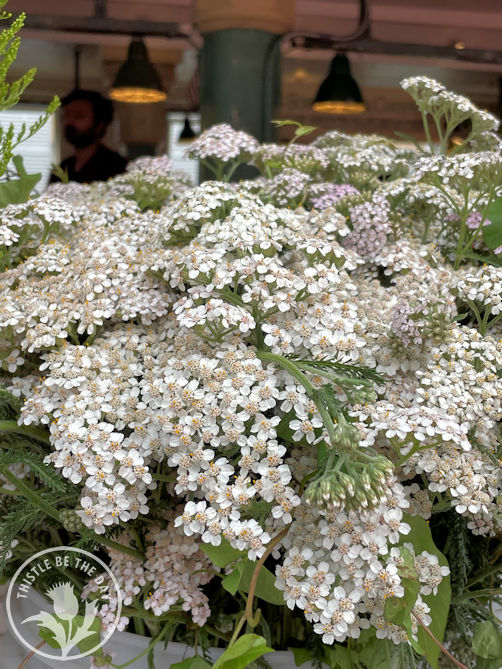
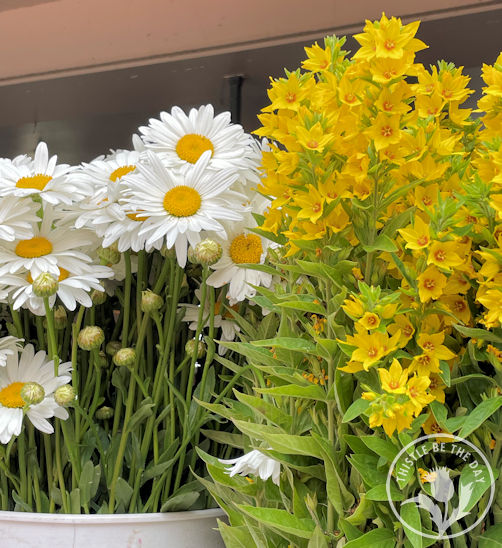
I loved taking in all the lovely flower varieties present at the Market. Most of the blooms I was familiar with and grew myself here on our East Coast farm; others I was intrigued to discover. I was particularly shocked to see that peonies were the featured flower at most of the flower market stalls. I felt it was unusual to see that many spring flowers in July. I assume these were late-spring varieties that had been dry-stored in coolers, lasting until early July. Or, perhaps they came from farms further north near Canada. Either way, it was lovely to see fresh peonies again, as ours had been gone for quite some time.
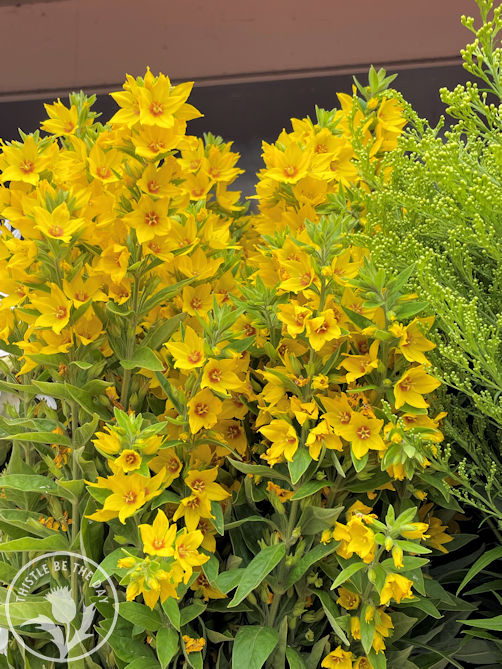
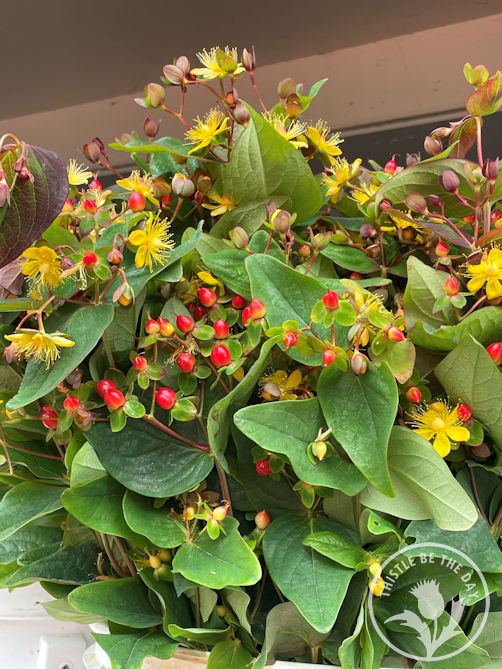
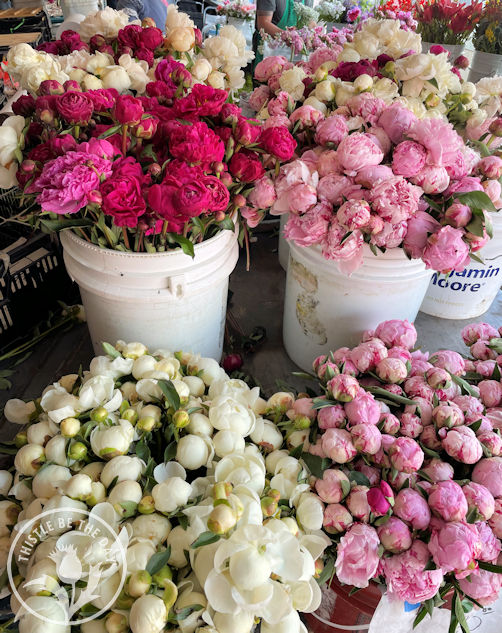
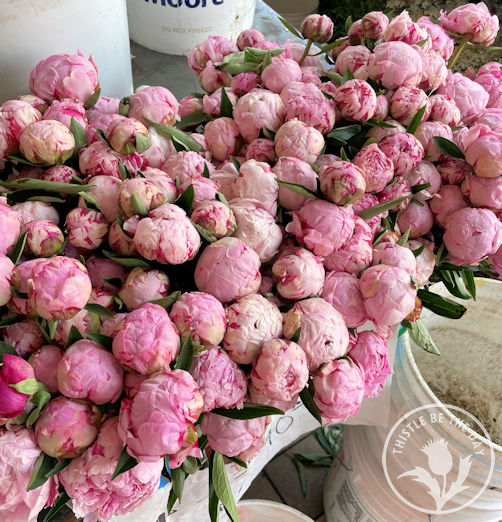
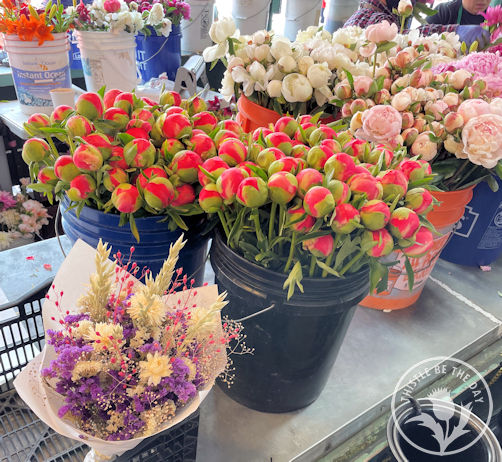
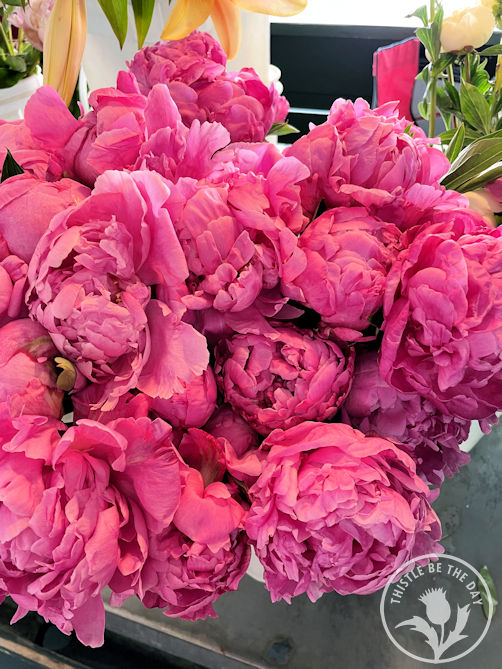
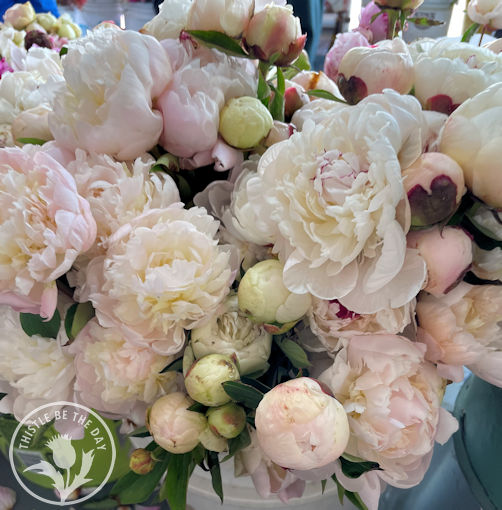
Another difference I noticed from East Coast farmers’ markets versus the Pike Place Market was flower pricing. The bouquet prices at the Pike Place Market were much lower than I was used to in our Northeast markets. Large, mixed bouquets with half a dozen peonies were selling for twenty dollars apiece, nearly half what I would expect at a market near me. No wonder both fresh and dried bouquets were flying off the Pike Place Market shelves! However, I’m sure there is quite a bit of competition in the fertile agricultural regions of the Pacific Northwest, which may drive down pricing. Still, it was uplifting seeing so many people enjoying fresh flowers while supporting the farms that grew them.

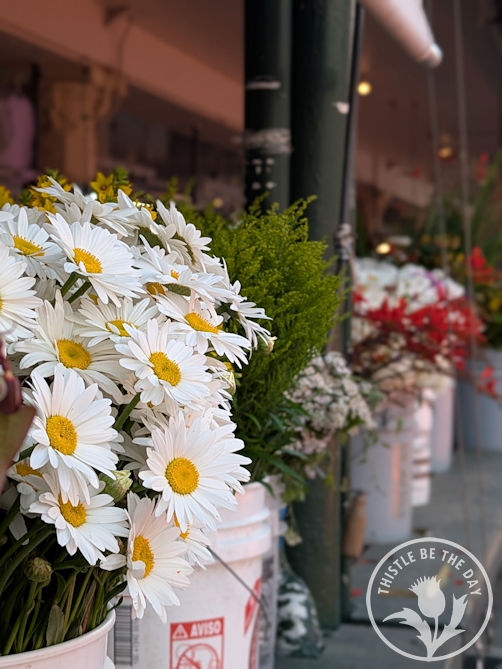
Visiting the Pike Place Market was an experience I’ll never forget. It was fascinating to discover the differences and similarities between flower farms on opposite sides of the country. Yet, despite any differences, we all share a love of growing fresh-cut flowers and sharing them with our community. I hope you enjoyed my recap of our field trip to Pike Place Market in Seattle. And perhaps it inspired you to enjoy fresh flowers in your home, whether from a local flower farm or your own garden.
Source: Pike Place Market
 THISTLE BE THE DAY