

It has really started to hit me. I miss the flowers. This has been a difficult season here on the farm as we work to heal our soil. All of the annual blooms that we normally grow and enjoy this time of year are absent, and we’ve missed them greatly. In the spring, their absence wasn’t felt as deeply. We had plenty of specialty tulips and perennial spring favorites such as daffodils, lilacs, and peonies. But now that summer has a firm grip on the farm, we’ve keenly felt the lack of farm favorite blooms such as zinnias, cosmos, sunflowers, and dahlias. When looking back at photographs from last season, my heart aches. Such abundance and beauty! It makes me fully comprehend how much joy flowers bring to my life.
So, as I write the farm recap for July, I realize the photographs are a bit sparser than normal simply because there aren’t as many blooms. And while relying fully on perennials this season, I’ve come to understand two things: 1. How important perennials are to the garden, and 2. That I don’t have nearly enough of them.
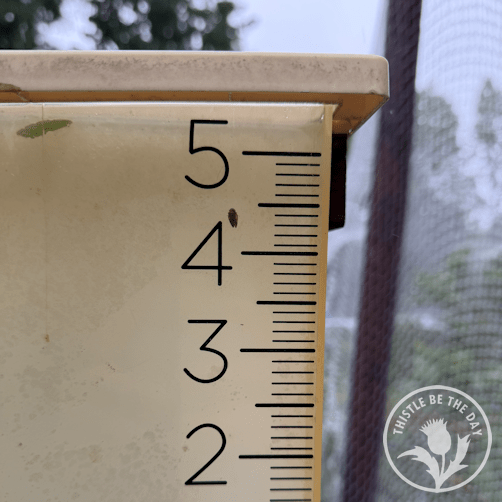
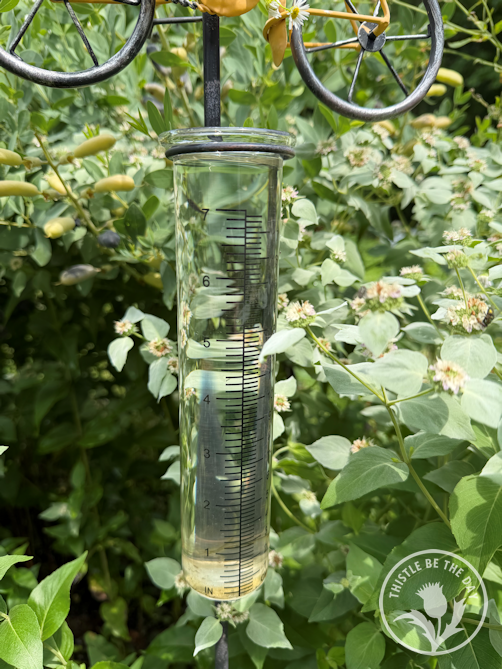
July brought a gambit of crazy weather, which, with climate change, is becoming less of an anomaly and more of a reality. The beginning of the month was very dry, with no rain and drought warnings, but by the end of the month we had several storms that brought 5-8 inches of rain within 48 hours. From drought to flood in a matter of days. Then, the wildfire smoke arrived. The farm endured a week of hazy days with a strange orange hue reminiscent of apocalyptic films. We couldn’t be outdoors for more than a few minutes before our eyes watered and our lungs burned, even with a mask. I couldn’t help but think of the wildlife and the plants that couldn’t as easily seek refuge indoors.
The effects of these extreme weather events were evident throughout the farm. Plants languished and struggled, and wildlife pressure increased. During the drought-like conditions, it was nearly impossible to keep the squirrels, groundhogs, and chipmunks out of our blueberry patch. Netting did nothing to deter them. They either chewed through it or tunneled underneath it. By mid-July, normally the peak of our blueberry harvest, we had only managed to pick a handful of berries. The rest were harvested into the squirrels’ bellies.
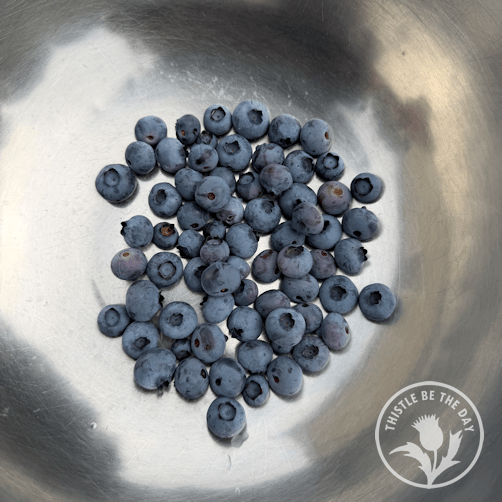
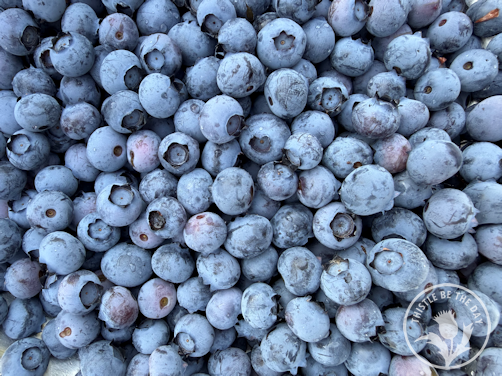
Despite a rocky start to the blueberry season, after the rains arrived and the wildlife were less desperate for water, we were able to harvest some berries. Unfortunately, not enough to share with our community, as we’d planned. Due to the weather, some of our blueberry bushes didn’t produce fruit at all, and others lost fruit during the drought. But two or three of the bushes came through, and we were able to harvest a respectable amount of berries to enjoy.
Another edible we harvested in July was our garlic. We’ve been growing garlic here on the farm for about thirteen years. We harvest bulbs in early July and let them cure for a few weeks. By the end of July, we clean and trim the bulbs to prepare them for storage. During cleaning, we sort and save the largest, best bulbs to replant in the fall for next year’s crop. We’ll enjoy the others throughout the winter months in our favorite recipes.

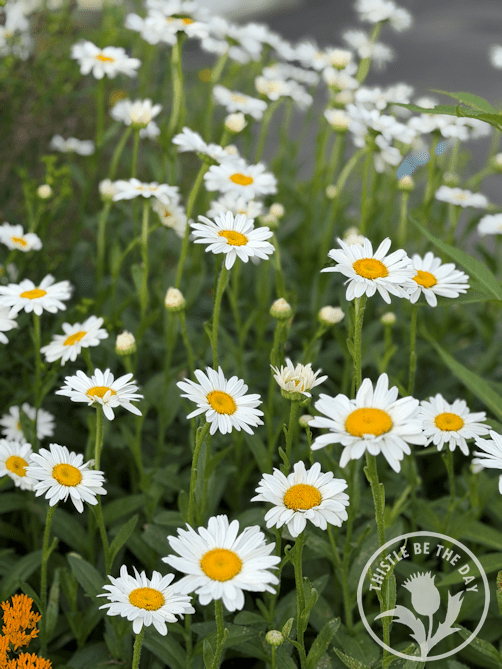
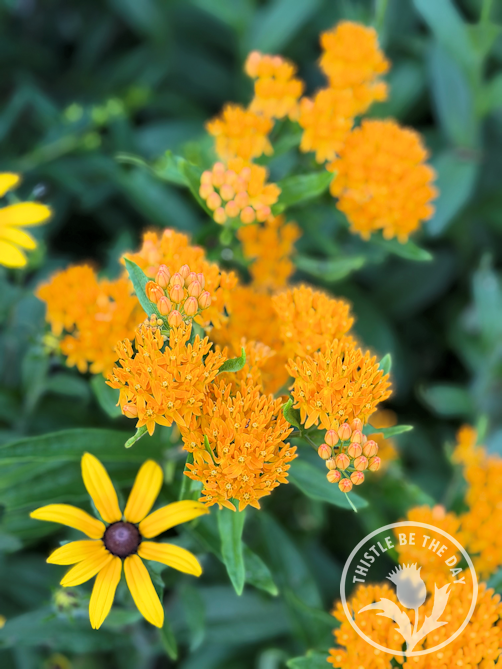
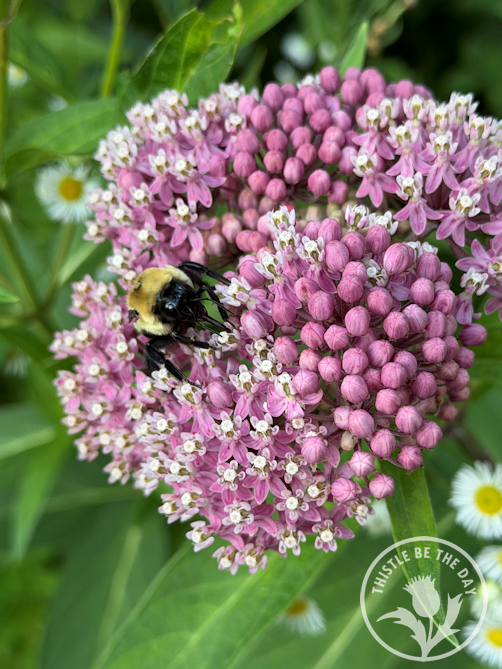
As for flowers, we did enjoy some perennial favorites. Daisies, feverfew, butterfly weed, alliums, veronica, and hydrangeas all came into bloom in July.
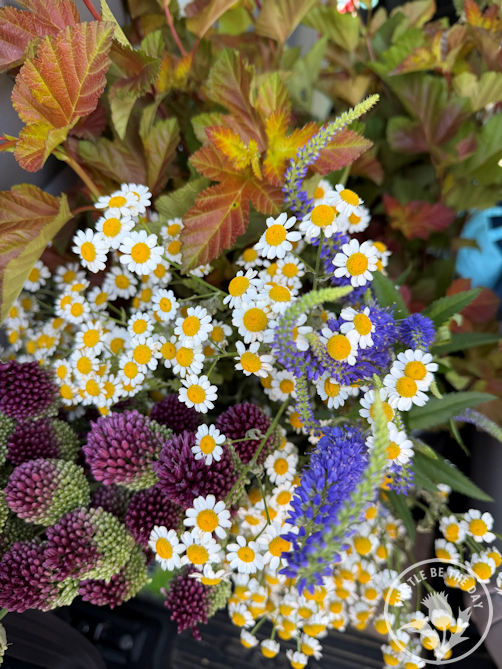

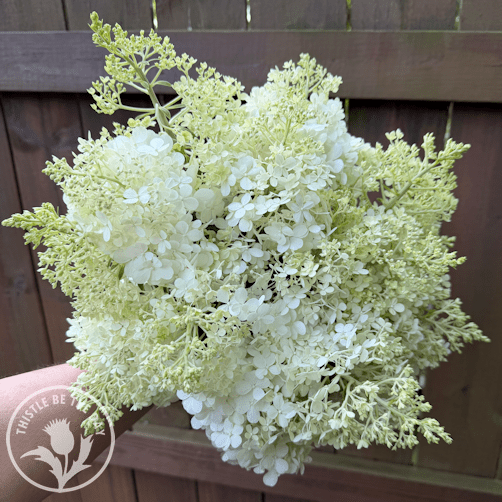
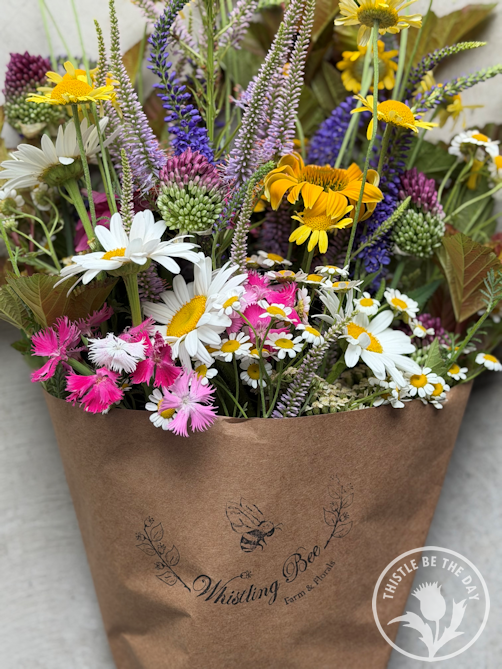
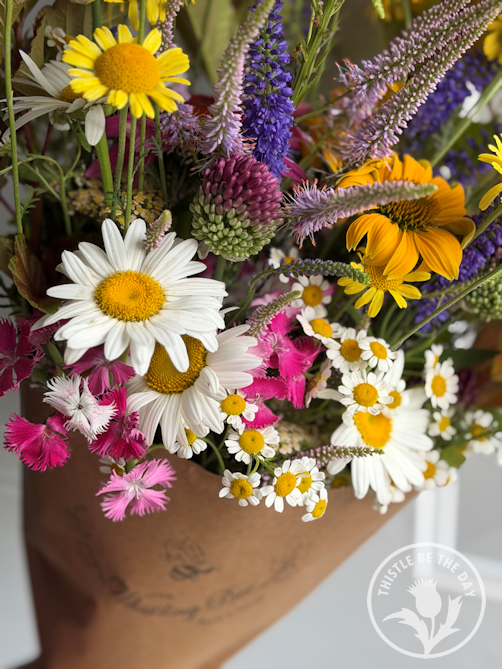
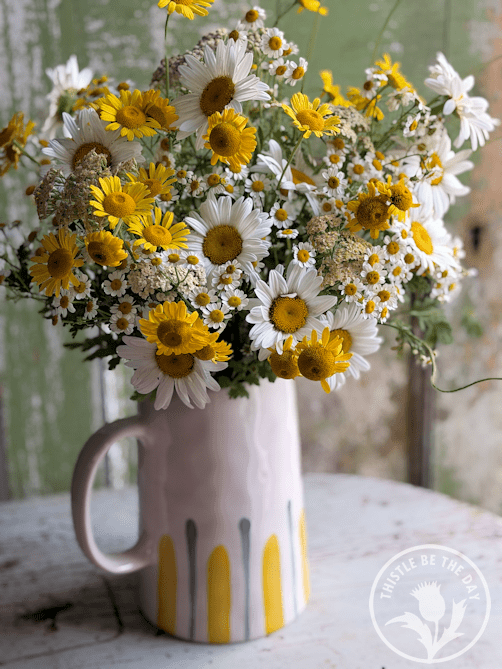

I appreciated the flowers we did have, and so did the pollinators. We welcomed many pollinators to the farm, and the bees happily whistled while they enjoyed the flowers in bloom. Seeing them on our farm always makes my heart happy.
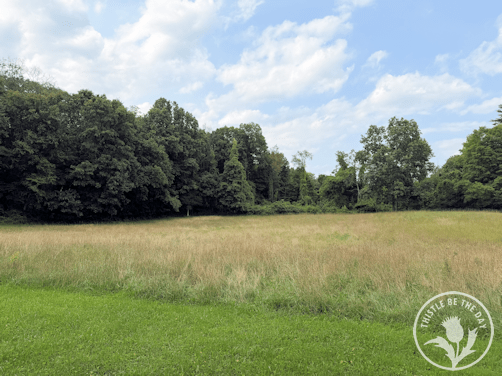
Lastly, I want to update you on our new farm property. Things are moving right along! Excavators came in early July to remove three dilapidated outbuildings and an old barn foundation, and I can’t believe how their absence has opened up the property and the view.
We also met with a pond expert who identified two invasive aquatic plants in our pond: duckweed and watermeal, some of the smallest flowering plants on Earth. We hope to add aeration to the pond in the future as part of our plan to help mitigate them and to keep the pond a thriving ecosystem.

As for the farmhouse, floor plan designs are almost complete, and we obtained our demolition permit, so interior demolition inside our 1882 farmhouse began! It was very exciting but also a bit daunting to see our home brought down to its studs. During demolition, we got some unfortunate news: asbestos was discovered in some wall insulation. So, demolition is currently paused while the asbestos is abated. We also discovered that all the electrical will need to be replaced and that the hardwood floors upstairs unfortunately can’t be saved. But despite the challenges (which we expected in a 150-year-old house!), now that the wood paneling and shag carpeting are gone, all we see is possibility. We can’t wait to restore this home and make our dream home a reality.
That’s what’s been growing on at our farms; what’s been growing on in your garden?
 THISTLE BE THE DAY
It certainly was a tough summer for gardeners. Hope things go well with the renovations.
LikeLiked by 2 people
Thank you, George! I agree, it was a very challenging year for gardeners.
LikeLike